
What Is The Brief Of This Project?
For this project, this is an industry set brief where we work as a group to create a new game IP, and we are given the opportunity to make a vertical slice of a game of any genre.
The following attributes must be met within this project, such as it being fun and engaging for a mature audience, no sexual themes, game being completable within 15-20 hours, no multiplayer modes, story heavy and gameplay light, unique and developed art styles that the team agrees with, and simple UI.
We are encouraged as a team to take more unique and creative approach towards this project, and develop ideas further such as challenging ourselves to take more risks and be playful, asking ourselves unusual questions, and change things around when necessary.
Contextual and Visual Research Summaries:
Charlotte's Research
Clair Obscur Expedition 33 Summary:
Expedition 33 is a turn-based rpg set in a fantasy France. I looked at the environments and enemies of the Flying Waters level, a magical underwater looking landscape that the players walk through. I think we can take inspiration from some of the environmental features like the floating chains and ruins, corals, remains built into the walls and watery animations to make a magical feeling. Having a mix of areas with buildings or ruins, mysterious dark spaces and coral reefs can create some more variation in the ocean. In the environments, there is also lots of cues to direct the player without using mini maps or big checkpoints that feel unnatural. In the game they use pathways, magical lanterns, coral outcroppings, scuffed walls and the bodies of previous expeditioners to imply the path forward indirectly. For creature design, I think the Nevrons would be good inspiration for some enemy designs visually - coral, barnacles, different frames, weaponry, attacks - as well as using these visual elements to indicate danger levels like how the bioluminescent ones - chromatic nevrons - are more dangerous versions of enemies. Having contrast with the bright corals on the dark and menacing enemies could make them seem more unsuspecting and blend in with their environment.
Gris Summary:
Gris is a platform-adventure game that follows Gris, a girl in her own watercolour world of grief. I really like the architecture and monuments in this game and think their designs could be applied to any underwater ruins or statues we could include in our game. It uses a mix of geometric shapes and natural curves and weathering to imply how huge and old these focal points are. I also really like the colours in the final 2 levels that are a monochromatic blue then a mix of blue buildings with colourful plant life. For game design, making something like a huge monument or big tree could serve as a weenie or focal point for certain levels. The atmosphere is also really magical with the layering and art style making it both calming and daunting as everything around you is so big, similar to how the ocean could be perceived.
Lovers in a Dangerous Spacetime Summary:
Lovers is a one to four player couch co-op space shooter, where Anti-Love has invaded the universe after the heart shaped Ardor Reactor is broken. Your job is to travel across space, fight off the forces of Anti-Love and free captured space bunnies from their prisons. I wanted to look at a space game due to the parallels to the ocean and some mechanics we could implement or take inspiration from. Firstly, there are many environmental challenges from the different planet's environments like toxic atmospheres which we could look at implementing, maybe with polluted areas or whirlpools that force the player to strategise. The main game play mechanic is navigating your spaceship with lots of different stations like turrets, cannons, shields, map and engine. We could reflect this in our game if we have a submarine or some other vehicle to make travel more engaging. Finally, the level layouts with areas of calm and tension shown through vast, empty areas of space, lush health planets and dangerous monster filled caves could be an inspiration for level layouts, creating a sense of danger and the pacing of a level. There game goes very quickly from calm to stressful as you have to navigate controlling your ship, fighting off enemies and defending bunnies.
Different Real Ruins:
-
Pavlopetri - This is the oldest known submerged city in the world, expected to be 5000 years old. It is found in Vatika Bay, off the Southern coast of Peloponnese in Greece. It was discovered in 1967 and was originally thought to be dated to the end of the Bronze Age, around 1600 BC but evidence showed artifacts dating back to 3500 BC, with the submersion predicted to have taken place around 1000 BC as a result of earthquakes in the area. Interestingly, although eroded over time, there is a clear town plan including streets, buildings, roads and tombs, which is very unique for ruins, especially the oldest known site. Visually, it is just the walls of a town, but the fact it is so well preserved is unique. We could take this premise for our game as the oldest being the most untouched makes you wonder what other places like this haven't been discovered.
-
Shicheng - Also known as the Lion City, this city dates back to the Han Dynasty from around 25 to 200 CE and is submerged under Qiandao Lake in the Zhejiang province of China. In 1959, it was flooded during a project to make a lake that would power a hydroelectric station. It was rediscovered by the government 40 years later and was found to be very well preserved. There are over 250 carved archways, streets, statues and stonework's that are still in very good condition as a result of the deep and clean water. I think a well preserved city like this would be one of the best things to take inspiration from for our game, especially the monuments, archways and intricate details as it provides more visual interest than just some smashed up walls and implies the area is important and shows the influence people had there.
-
Baiae - This was an ancient Roman resort city, with buildings dating to 100 BC, in the Gulf of Naples, Italy. Earthquakes and volcanic activity caused lots of the city to sink, although plenty is still above ground and the city has many visitors looking to dive in the ruins. I find the most interesting part of these ruins to be the decorations and statues that have been found on the seabed. There are decorations such as a recreation of the Odyssey, figures of Dionysus and other mythological figures. Using this concept in our game to indicate some history of the world, the beliefs of the people who made the area and the ruins' age, could be interesting to explore for narrative and world building.
Els' Research
Various marine creatures use sound to communicate and navigate the underwater environment, and the tools we possess nowadays have been able to pick up their strange noises and analyse the soundwaves created. I decided to research this topic because the game our group intends to make involves an underwater setting, filled to the brim with unknown enemies and unsettling encounters with odd creatures.
ATLANTIC GHOST CRAB - OCYPODE QUADRATA
-
Using their body parts, they create unique sounds to communicate. By rubbing their claws or legs together, the ridges collide and a grating noise is made. Similarly, by stimulating the teeth inside of their stomachs, they can make an odd, crunchy growl occur.
ATLANTIC CROAKER - MICROPOGONIAS UNDULATUS
-
The name 'croaker' describes the sound these fish create. When under threat or attempting to impress a potential mate, they are able to vibrate muscles against their swim bladder, the bladder acting as a chamber which amplifies the low croaking noise created.
NASSAU GROUPER - EPINEPHELUS STRIATUS
-
When searching for a mate, they create low frequency sounds and grunts, most likely using the same method as the Atlantic Croaker; vibrating muscles against their swim bladder.
BIGEYE SCAD - SELAR CRUMENOPHTHALMUS
-
When under threat, they use teeth located in their gills; they are ground together to create a low frequency, rasping sound that expresses fear or pain. They often make this noise when captured in nets by those fishing commercially.
HUMPBACK WHALE - MEGAPTERA NOVAEANGLIAE
-
Due to their horizontally positioned vocal folds, they are able to create underwater calls to their partners and young calves. Their melancholic songs can last for four minutes to half an hour, the whales using the echolocation properties to locate others of their kind. The sounds they make vary from low-pitched groans to high-pitched shrieks, each a different way of communicating.
ANTARCTIC MINKE WHALE - BALAENOPTERA BONAERENSIS
-
These whales produce a bigger variety of sounds than the Humpback whale; whistles, clicks, and screeching are the most prominent, but they can also create low frequency noises known as downsweeps, pulse trains and 'bio-ducks'. Mating and feeding are events that cause Minke whales to call to each other, attempting to find suitable mates or revealing the location of food to their partners and young calves.
BELUGA WHALE - DELPHINAPTERUS LEUCAS
-
The Beluga whale has a large amount of soft tissue on its forehead known as a 'melon'. This feature enhances echolocation, allowing the whales to distinguish where gaps are in the ice to breathe and who else is nearby. They mainly create clicking noises that pass through the 'melon', letting them project the sounds in a particular direction.
In conclusion, each creature has their own unique way of communicating in these deep waters. Everything interacts and is connected with everything else; nobody is alone in the ocean, despite the eerie silence that is sometimes experienced. When people are told to imagine sounds regarding the ocean, they typically turn to bubbles or crashing waves. However, there is more to the depths of the ocean than this. All marine creatures use sound to communicate and navigate the underwater environment, and the tools we possess nowadays have been able to pick up their strange noises and analyse the soundwaves created.
Gracie's Research
As I wanted to work more on the design aspect of the project, I didn't do as much research as the others. For my research I chose to look at Pokémon and how they designed their creatures as to help that process. I mainly looked at water Pokémon that were based on real creatures but I also looked into some that were more abstract that could inspire the deeper levels.
This was also a good analysis in how Pokémon's designs have changed over 30 years. The Pokémon that originated from Generation 1 were pretty simple design wise and stuck closely to it's real life counterpart while some from later generations branched out with more unique silhouettes and ideas. It's most comparable in this case with the Horsea line from Generaton 1 to the Skrelp line from Generation 5, while its real life species are closely related how their designed in the same universe is vastly different, in regard to shapes and colours,
Another thing I researched which I thought could help with designing is looking into different more obscure aquatic creatures, as well as well known ones in general, to see if I could incorporate some of those facts into the way these creatures could act. Some of this research also helped with making the submarines later on.
Rhia's Research
Bioluminescence
Phenomenon where living organisms produce their own light through chemical reactions. The aesthetics of the type of creatures is what I decided to research about since the vertical slice features around the ocean. Bioluminescent creatures use light form of communication; in my research I found that that certain creatures will flash the light in specific patterns to either attracted a mate, or to warn a predator. I’ve found out that the anglerfish will use its modified dorsal fin that is located at the front of the mouth to attract prey to them.
The angler fish dorsal fin was modified to adapt to its environment. I’ve researched this because of the visuals and because this can be included into the vertical slice. I researched into a stu specifically for one art piece which Is siren song cliodhna, this piece shows off a scary siren. I like the idea of adding mythical creatures into the vertical slice, I think it would add some mystery to the game, by seeing something that doesn’t quite match the usual marine life. The art piece shows that the siren has a bad intent for the diver.
Biolum
Biolum is a VR game that explores the deep ocean and its bioluminescence. I enjoyed the idea of this game being a virtual reality game as it can leave the player feeling more immersed in the digital ecosystem. The story line for this game a sci-fi horror where you play as a diver exploring new places uncovering plants and what you believe are ‘new’ species but are mutants of plants and sea species fused together. The game being on VR means that it has limited its audience to only those that have a headset, meaning it is not able to reach a bigger audience. Beyond the visuals of this game the game presents itself as a chance to uncover secrets and puzzles as well as following the amazing story line. The game includes voice acting, which I believe offers a more immersive experience
Hilda
Hilda is a Netflix show inspired by Nordic folklore combined with modern storytelling with an aesthetically pleasing colour pallet to it, utilising a blend of soft pastels and warm tones. In this case my research leans in to the environment, creatures and colours that take place in the world so that this could be taken as inspiration into the vertical slice.
From my research I’ve found that the local colour of objects in the show take from the character Hildas design; by doing this the world feels more connected to the place. Magic is often resembled with brighter neon colours that deviate from the regular colour scheme. What interests me the most is the different type of dimensions and creatures, that are designed to look out of this world, for the vertical slice creating new creatures, species and dimensions that are not normally found in underwater exploration games could create a nice difference that sets its apart from other ocean themed games.
Emmy's Research
Dispatch
To sum up my research, Dispatch is an episodic tell-tale game, that heavily relies on the player decisions to draw the narrative forwards. The main mechanics of the game is that the player needs to understand and read certain characters abilities, and dispatch heroes to specific situations that matches with abilities and stats in order to counter the problem. The game can reach a diverse range of audiences, due to the collaboration with Critical Role, and having high-profile celebrity voice act the games' characters. This also means that the game can reach a wider audience from different communities, which they can further promote the game to others.
What I've taken from this game is that its really good with making the player feel immersed into the game, as every reaction sparks a reaction with the world and its characters. One thing that I personally didn't like about the game was that Dispatch limits its players with what characters you are allowed to romance, and it doesn't let its players to be queer character, especially with how studio markets Dispatch as a LGBTQIA+ game, making the player feel a bit out of control of their game play.
There is also a DND feel to the game, which makes it a fun and engaging way to introduce first time players into decision/narrative games, especially since Critical Role help develop Dispatch.
The UI is very simple and clean, with a modern feel to it. I think this is something we can take from the game, as this can influence how we can effectively present a game to an audience, while also directing the player onto different sections of our game. Dispatch's art style can be described as 2D animated visual novel, with very heavily influence on super-hero comic/graphic novels. The overall colour pallet of the game is very bright and bold, and yellow and blue seems to the main colours that represent the game, making the game look and feel visually interesting.
Slime Rancher
In conclusion, Slime Rancher is a game that is simple and straight-forward to play, that allows it's players to take their time to explore and be experimental with their game play, while being creative with their resources and world. It is a game that mostly appeals to all ages, due its stress free game play, little to none intense combat and fighting. It appeals to the achievers player profile, as the game relies on its player to become more powerful overtime with the gadgets and tools, while also having the creative player profile being interested as well, as they can decorate and place facilities wherever they would like, customising their experience. For a much more mature and older secondary audience, the immersive player profile would enjoy slime rancher as the player learns about Beatrix LeBeau as they read starmail from their in-game lover and why they are in the world of slime rancher.
Slime Rancher is effective because it has an engaging game loop that makes the player wanting to play more, due to a lot of content there is to discover. The art style of the game is also unique and pleasing to the eye, and it can be enjoyed by all age groups, both children and adults.
Within the project, we should take into consideration on how to reach a diverse and varied groups of audience types, and we can do that by trying to make our game child-friendly, while probably including some sort of secret narrative for a much older audience to uncover as they play the game more. I think it is also important make the game art style appealing and visually unique to reach out to wider audience, as it is the main component to catch the attention of an audience.
Concept Art Communication for Dead Cells
In conclusion, Bonin is a great example of effective visual communication when it comes to game concepts, as you are able to see the process behind the ideas he's trying to display, as well as exploring different alternative design to show variety towards the developers. His character design also display dynamic posing and shape-language, which makes all his initial designs different from the other characters He also annotates his concepts to document his creative process, and to communicate alternative ideas before presenting the final pieces towards the team, supported with character side-views/poses to show off more of the costume design.
Red's Research
The house - A stop motion movie telling a cautionary tale of materialism, which contains three stories all set in the same house but in different worlds; the first story takes place in the 19th century and focuses on a family whose parents are consumed by obsession over their new house and neglect their children, the second follows a house developer blinded by his pursuit of a new speedboat, and in a haste to sell the house he becomes animalistic like the bugs he tried to cover up, the last follows a landlady too focused on getting rent from her tenants and realising she should have been focusing on the flood threatening to take over the house and her relationships, she escapes with the help of others.
We could have a game with a three part structure and focus on one part for the slice, ideas of having a flooded environment for the game as we are going to go for a sea theme. Using themes of sentimentalism and change, possibly materialism. Using colour symbolism.
Slime Rancher - Pastel vibrant colours, soft shapes and smooth gradients are primarily the factors that make slime rancher cute and pleasing to the eye, having a contrast of cute and scary creatures by using colour and shape language to differentiate friendly and enemy characters.
Biology - Pressure, temperature and light are three environmental factors that affect the biology of deep sea fish the most. Deep sea aquatic life may develop “piezolytes” which are molecules that stop high pressure from distorting larger biomolecules. Deep sea marine life is adapted to have flexible proteins and saturated membranes that don’t freeze in the cold. There are six different functions of bioluminescence, an interesting example to see is the dragonfish, which uses red bioluminescence (a colour wavelength other deep sea fish cannot see) to see prey with a stealth light.
Concepts
Flying fish that leaves behind rainbow
Naturally Diaphonized Animals
Story Ideas
-
Being a fisherman on the shore and returning washed up sea creatures to the sea, only to find out the reason they are going to the shore is because of an invasive creature (meant to represent pollution)
-
Your house is being swallowed by rising water throughout the game, and in order to save all the memories inside the house you have to rebuild it as a floating house. The game represents change and having to accept it.
Keira's Research
Still Wakes The Deep, Siren's Rest and Bioshock each have an underlying theme of industrialism and decay under water.
Still Wakes The Deep
You follow Cameron 'Caz' McLeary, an electrician on the Beira D oil rig, in 1975 on boxing day. As he sets about getting food from the cafeteria, he is called to the office of Rennick on the opposite side of the rig. On his way over, he passes and greets his co-workers who appear to be preparing for a dive.
When Caz makes it to Rennick's office, it is revealed that the reason that he took the job was to avoid an assault charge on the mainland. Rennick sacks Caz and informs him that a helicopter is on its way to return him home. Part of the way through their conversation, they are interrupted by a phone call from the diving team explaining that they had hit something and that they don't know what it is. Rennick tells them that they are to keep drilling despite concerns.
Before Caz can actually leave the Beira D a loud crash rings out, rattling the rig and throwing Caz and a few others overboard. Caz drifts in and out of consciousness, having a flashback to Roy (Caz's best friend and the Beria D's chef) informing his wife, Suze, of their plan to take on the job. As Caz drifts, he is tended to by Douglas and Brodie. When he awakens he meets with Brodie who is trying to raise the diving bell that Raff is trapped in.
Caz is sent to engineering, travelling under the rig and coming across 'The Shape' surrounded by a bright blue light. The Shape is a blood vessel-like creature that starts to transform the workers on the rig into agonising monsters.
Caz attempts to secure the lifeboats, but due to poor construction and the wreckage going on they are lost in the sea. Rennick orders for an emergency helicopter and tries to leave without the rest of the crew, but as they take off, the helicopter takes a sudden turn and crashes into the Beira D.
As the creature's tendrils further damage the rig Caz, alongside Finlay and Brodie, helps to prevent the rig from capsizing.
When a flare tower fails, Caz has to prevent a gas explosion, and attempts to rescue Roy, but by the time Caz finally arrives, Roy is dying from diabetic ketoacidosis. Brodie sacrifices himself to float the rig, resulting in Finlay snapping and attempting to blow up the Beira D using a lighter that Caz had given her prior to the chaos had started. Before she has the chance to do so, she is crushed by a piece of falling machinery. Before she succumbs to her injury, Finlay convinces Caz to explode the rig instead and prevent the infection from reaching the mainland. Caz agrees to do so, reliving memories of meeting his wife and the birth of their children in his final moments.
In Scotland, Suze, who had hinted at wanting a divorce, writes a letter to Caz, hoping to persevere with their marriage, wishing him and Roy home soon.
Siren's Rest
Set ten years after the main game, Still Wakes The Deep: Siren's Rest follows Brodie's daughter, Mhairi. She is the head of a diving team exploring the underwater grave of the tragic Beira D, determined to uncover what really happened on board.
With the support of her colleague, Rob, and her supervisor, Hans, Mhairi explores the wreck in the depths of the North Sea. She uncovers and photographs bodies, logs from the rig's crew, personal items and the possibilities of what could have happened as well as finding closure for the families affected by the incident.
Looking at what surrounds the bodies of the former crew, it appears that coral reeves have formed around them, but something is off. Rather than coral, we are actually looking at the calcified remains of what once was the blood-vessel-like tendrils that had transformed the crew.
Mhairi surfaces into an air pockets, making her way through familiar areas such as the observation deck, having to jump across platforms in the, now destroyed, rig, even detaching herself from her umbilical as it catches and obstructs pathways in the collapsed Beira D.
The reason that Siren's Rest works as an added piece to the already rounded out story of 'Still Wakes The Deep' is that we see the consequences and affects of the past. As the player we have an extra chunk of knowledge that Mhairi does not have; we know of the Shape, the tendrils, the mutations. All Mhairi knows is that her father was on this rig and that a tragic explosion destroyed the structure and its crew. We tour the familiar grave site through a set of different eyes, in a dilapidated state. It changes how you move (the added resistance of being underwater), the reasons for your sense of urgency (trying not to drown as opposed to joining mutated co-workers). You don't know what remains, the game sticking to the fear of the unknown that plays into Lovecraftian horror.
The two separate sections of the game work in tandem in order to use the twist of time to create its own sense of horror, gloom and decay.
Bioshock
Set in 1960, Jack, a lone plane survivor, spots a lighthouse and swims from the wreckage left behind. He boards a Bathysphere that takes him deep within the ocean to Rapture. With Assistance via radio from a man named Atlas, Jack makes his way to safety. However Andrew Ryan believes Jack to be a government agent and uses Rapture's automated systems and pheromone-controlled splicers against him.
Initially, Rapture was intended to be a utopia. A place where people would be entitled to all that they made without 'parasites' causing any interference as introduced by the billionaire mogul Andrew Ryan. Since then, Rapture had decayed, experiencing the aftermath and the effects of civil war and anarchy that was brought about by the ideal and greed of citizens.
With the help of a sympathetic smuggler and a rogue geneticist, Jack transforms himself into a superhuman using salvaged gene-altering chemicals. Using his new abilities, Jack fends off against mutants, security robots and armoured supersoldiers created in the unrest of Rapture; all the while he is told by Atlas that the only way to survive was lethally harvesting the genetic material, 'ADAM', from Rapture's only citizens with a chance: the 'Little Sisters'. Upon overhearing Atlas's words, Dr Tennenbaum intercepts Jack, encouraging him to try and save the sisters instead, giving him a special plasmid that should only kill the slugs whilst leaving the girls alive and restoring their humanity, although the rewarded ADAM is significantly less, Tennenbaum promises to repay Jack should he do as she asks.
As he travels through the city, Jack uncovers the history of Rapture via audio logs, genetically induced playbacks of the past and radio messages. Atlas claims to Jack that his wife and child have been hiding on a submarine, upon reaching where it is located, Ryan has it destroyed. Atlas tells Jack that Ryan must die.
Jack makes his way to Ryan who reveals why Jack has really come to Rapture. Jack was born in Rapture two years prior to Ryan and an exotic dancer named Jasmine Jolene and was genetically modified to mature rapidly. It is further revealed that after purchasing Jack's embryo, Frank Fontaine designed him so that he would obey any orders that start off with the phrase 'Would you kindly'. Jack was sent to the surface when the war started to put him beyond Ryan's reach. As the conflict between Atlas and Ryan reached a stalemate, Jack was ordered to board a flight with a package which he opened at a designated time. Inside there was a gun and a set of instructions to hijack the plane nearby the lighthouse, forcing his return to Rapture. Ryan proceeds to demonstrate Jack's lack of free will using the aforementioned trigger phrase as to which Atlas has been using since his arrival. Ryan orders Jack to kill him to die on his own terms, leaving Atlas in complete control of the city.
Atlas reveals himself to be Frank Fontaine. He had faked his own death and taken on the alias of Atlas hoping to throw Ryan off his trail. With Ryan now dead, Fontaine no longer needs Jack, leaving him at the mercy of the reactivated security system. Dr. Tennenbaum and her Little Sisters help Jack to escape through the vents where he falls and loses consciousness.
By the time Jack awakens, Dr. Tennenbaum has already deactivated some of Jack's built in responses and assists him in breaking the rest of them. In their attempts to find Fontaine, Tennenbaum predicts that in order to get through the last few obstacles, Jack would have to assemble a Big Daddy diving suit and follow the Little Sisters through paths that only they can open.
When Jack reaches him, Fontaine has injected himself with a large amount of ADAM, turning him into an inhuman monster. Jack and Fontaine battle and Jack prevails, allowing the Little Sisters to subdue Fontaine, swarming and stabbing him with their needles, killing him and draining him of the ADAM in his system.
Three endings are possible in the game: the first is achieved by rescuing all of the Little Sisters. The Little Sisters return to the surface with Jack, living under his care, they are shown living full lives. It finishes with Jack on his deathbed surrounded by the Little Sisters.
If the player harvested (and killed) two, but not all of the Little Sisters, the game ends with Jack turning on the Little Sisters after defeating Fontaine, presumably killing them and taking their ADAM. Tennenbaum narrates what occurred and condemns Jack's actions. Later a ballistic missile submarine carrying a nuclear missile comes across the wreckage from the plane and is surrounded by bathyspheres containing Splicers, which kill all on the submarine and take control of it.
If the player harvests and kills all of the Little Sisters, the same sequence as the second ending occurs, but Tennenbaum's tone is angrier.
Aesthetics
Bioshock leans into the dieselpunk aesthetics, a retrofuturistic sci-fi subgenre that steals the technology and looks of the interbellum or interwar period up to the 1950s and fuses it with an alternate history.
In a similar manner to Bioshock, Still Wakes The Deep uses industrialism to push a sense of unease upon the player. The game combines this mechanical effect with 70s naturalism and Lovecraftian horror.
Lovecraftian horror is a subgenre that explores the insignificance of humanity, the fear of the unknown and the knowledge of something incomprehensible. The subgenre is heavily influenced by the author H.P. Lovecraft earning it the name.
70s naturalism was a trend across media and fashion that placed an emphasis on realism, authenticity
Charlotte - Research
Clair Obscur: Expedition 33
Clair Obscur: Expedition 33 is a rpg developed by Sandfall Interactive. It follows the members of Expedition 33 on their journey to kill the Paintress, so she can no longer paint death in their city Lumiere. You battle a variety of unique enemies across different environments inspired by Belle Époque France in turn-based combat with real-time mechanics. Since we are focusing on underwater areas, I want to look into the flying waters zone and enemies along with the over world map visuals and interactions with water. Flying waters is the second area you visit on the continent and has a mysterious atmosphere where you appear to be walking along the bottom of the ocean. The below images were created by Carla Devèze, the head environment artist at Sandfall. The atmosphere of this level is created by a mixture of mysterious and magical natural effects and the old ruins of the city coming together. I think the fantasy twist that all the environments have works very well with this level, especially in the shapes and light. All the different shapes of coral and seaweed dance around the blue ocean colour and the small lamps and lights that guide the player through the level to create an almost starry look. This highlights the otherworldly magical atmosphere that the entire continent has. Additionally, the fractured boats, floating chains and suspended ruins really sell the fact that this is supposed to be under the sea, although you aren't, since you are able to walk naturally across the sea floor and breathe the air normally, further creating this unnatural and magical atmosphere. There are also regular sea creatures swimming around right above your head throughout the level, including whales, sharks, schools of fish and dolphins. The natural, colourful plant life, subtle animations that make it look like water is flowing around and mixture of animals that surround the environment while the characters exist in the space as if they are just on land, makes for a mystical and vibrant atmosphere throughout the level.
In regards to game design, the levels in the game have no maps or obvious indicators as to where to go, so it fully relies on the environment design to guide the player. This level does this by carving out paths in the coral with vibrant sea grass, leaving pathways that previous expeditions have left with hooks and grapple points, using the ruined landscape of Old Lumiere's buildings and lanterns as well as positioning enemies across the route you are meant to take. The game also rewards you for exploring the levels, as off the beaten path you can find colour of lumina, chroma and pictos - items that give you new abilities or currency to spend. I really like this way of guiding the player as it makes you feel like you are actually exploring this place for the first time - you are the expeditioner, not just the player controlling the expeditioner. The destroyed and abandoned buildings come from an event in the world called The Fracture, when Lumiere split apart into the place the protagonists came from, separated from the continent by the Paintress. The remaining buildings on the continent have been claimed by the magical, twisted environment. The remains of previous expeditions and the ruins of Old Lumiere add to the overgrown, fractured landscape of the continent and the strange unnatural mood of Flying Waters.
Another aspect of the game I wanted to look at was the overworld map. This area shows the entire continent and is a place where the player can set up camp to upgrade weapons and skills, talk to other expeditioners, find extra levels outside of the ones the main story directs you to, find items, fight enemies and travel freely. I really like the vastness and amount of places to explore on a map like this as you are able to fly, run and swim across the world to travel to each area. Each level is also condensed to a small island that shows the environment within it so have a sense of whats inside. My favourite parts of the map are the giant boss enemies that stand guard of certain areas, such as the Sprong standing in the ocean or Serpenphare flying in the sky above Flying Waters. These creatures indicate the scale of the world and how huge and unnatural the enemies - named Nevrons - and the changed landscape are. I next want to look at the Nevron designs from Flying Waters as well as some of the bosses that can be found around the continent that fit with the watery theme.
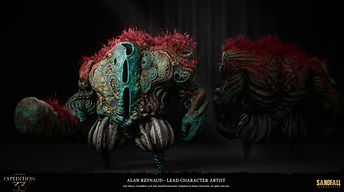
As I said previously, the common enemies you meet in the game are called Nevrons, and are dangerous creations of the Paintress, there to drive expeditioners away from her monolith or kill them. These enemies from flying waters and the over world map were designed by Alan Reynaud, the games lead character artist. I want to look at these designs as I think they could be good inspiration for underwater enemies or mysterious, looming creatures.
In flying waters, the enemies all blend in with their environment in regards to the red and blue colours as well as their bodies being covered in coral and other ocean plants. Each have their own unique skill set and animations that match their appearances well. For example the Bourgeon (top left) is a huge creature that stalks the level and uses its gaping mouth to inhale characters wheres the more airy Demineur (middle left) floats around while dodging attacks and leading a long chain attached to an explosive mine that can be used against the players or free shot at to greatly injure it. The animations during combat are very dynamic, the camera angle shifts, the screen changes to indicate the weight or swiftness of the attack and the nevron's body movements are exaggerated and threatening.
For the boss nevron's of the over world, I wanted to look at the Serpenphare and Sprong as they also have similar features like the coral and some water damage on their metal parts. I find in these enemies you can see the Belle Époque influences more in the metallic colours, lighting and shapes, making them fit the theme across the game of the fantasy meeting the man made. I also really like the flying snake or eel appearance of the Serpenphare. These monsters being so huge and looming shows how dangerous they are and shows the unnatural scale of the world.
Additionally, some of the nevrons have neon glowing strips of colour across their body. This is utilised further in chromatic nevrons, a variety of enemy that takes the regular design and adds the bright colours, indicating they are much stronger and more dangerous. The colours can also correlate to the elemental damage type used in its chromatic attacks. This reminds me of bioluminescence, which Rhia is researching. This could be a way to implement that into the game design rather than just a visual element by having the lights indicate that an enemy is more dangerous, or the opposite. The way Expedition 33 shows friendly versions are through white nevrons, which are nevrons who have lost their connection to the Paintress and have different goals. Instead of fighting when you meet them they can ask for you to do them favors, partake in a parrying or dodging mini game or collecting something for them. The other friendly creatures in the game are the Gestrals, who are relaxed wooden people who look like paintbrushes with a humanoid shaped body. They are shown as different to the nevrons through their more laid back stance, talking to the player in weird voices and running around their village doing strange things like spinning and fighting each other. Having a mix of friendly, neutral and hostile creatures that have the cute and monstrous contrast between each other could be something we include in our game.
From this research, some ideas I plan to present to the group are having the environments have some of that unnatural and magical energy with features like the floating ruins, flowing chains and old remains built into the walls. I will also propose having some buildings and lights under there, if that is through ruins, monuments, an area above water or a current civilization that exists under the sea depending on what narrative we come up with. In regards to creature design, including the features like coral, barnacles, tentacles, sea grass and water damage to enemies could be interesting and thematic. We could also link the bioluminescence in the way I mentioned and use the contrast of dark enemy colours with the bright highlights to creating ominous and menacing appearances. After this research, I want to look more into older architecture styles and ways we could incorporate that into the environments like through ancient ruins or places the character goes. I will look at a few more games as well as this in real life.




Gris
Gris is a platform-adventure game developed by Nomada Studio that follows the titular character, a young girl lost in her own world. She journeys through a watercolour landscape representing her sorrow and grief, with her dress that grants her more abilities to navigate this world. I wanted to look at the visuals for this game due to the buildings throughout, the water level and unique watercolour like art style. The game play is calm and has no danger or death with the main mechanics being platforming, light puzzles and optional skill-based challenges. There is almost no text or guidelines, with controls displayed through icons and the story unveiling itself through the dreamy visuals and score. These images come from the fourth and fifth chapters of the game, representing the corresponding stages of grief. I picked these two levels as I love the colours and buildings seen throughout. The art is a mixture of curvy and soft with the natural elements but is contradicted by the geometric and symmetrical architecture. The games creative director, Conrad Roset, has said his style is strongly influenced by expressionism, prioritising the mood over the technicality and realism of the scene. In regards to the architecture, there is a mixture of ruined buildings, pillared platforming sections, cave pathways monuments and statues that illuminate the otherwise barren and old natural landscape of this world.
In the fourth chapter, the focal buildings are lit up in streaks of blue light and have even and solid line work but with curved lines and lots of movement. My favourite monument in the level is the huge falling statue as it has lots of movement in the hair and body while still fitting in with the evenness of the rest of the level and showing how it is old and ruined. This level also contains the water sections which are used as landing spots after large drops, sections to swim through or a border around a central point. I really like the reflections and mistiness of the water as well as the subtle wavy movement it has. The colour of the level is a monochromatic blue but the water and focal points still stand out thanks to the brightness of it, the lighting and the composition with the water surrounding and framing monuments.
Although not water based, I also wanted to look at the fifth chapter because of the natural elements, shapes and colours. In this level, you explore the lush and colourful temple by chasing colourful birds, following golden and pink lights and chasing fireflies. I really like the mix of foliage throughout the level with the different shapes, colours and straightness in which it falls. The nature looks wild and overgrown but also fits in with the environment due to it being very geometric and framing the pillars. I also really like the circular shapes used in this level, in both the architecture and visual effects and Gris completes puzzles. The cloudy backdrop and solid streaks of bright light create even more of a peaceful atmosphere in the level. This whole environment feels more calm and alive than the rest of the game, representing how she has reached peace and acceptance in the last leg of her journey.


After this research, I want to present a few visual ideas to the group. I am focusing on the architecture here and I think the game is a unique example of the style of ruins and monuments we could use if there are any places that need them underwater. The movement, flowing but geometric shapes and natural elements like plants and bugs create a magical, calm and daunting atmosphere when the small character is faced with such huge structures. I will also look at the lighting style as there is lots of layering and contrast between the bright and dark sections that I think would work well for a deep ocean environment, especially the blues and sky lighting of chapter four. Next, I want to look at more buildings in real life and ruins from history as well as looking at a game for some mechanics and themes that could work well for some of the groups basic ideas.
Lovers in a Dangerous Spacetime
Lovers in a Dangerous Spacetime is a one to four player couch co-op space shooter game developed by Asteroid Base. The players - or lovers - must pilot their spaceship to save kidnapped space bunnies after an error in the XOXO matrix breaks the Ardor Reactor, allowing Anti-Love to invade the loving universe. The bunnies are trapped across different planets and must be freed for you to reopen heart portals and defeat Anti-Love. I wanted to look at this game because one of our ideas has the player defeating monsters to save smaller creatures and this game fits that game play loop. Additionally, since the game is set in space, there are lots of parallels between that and the ocean and it could be helpful to look at the mechanics of Lovers for the game design of our project. The game has a neon and simplistic art style with enemy designs like robotic bugs, snappy fish, sentient tanks and giant, electronic personifications of constellations. The game play consists of frantic ship navigation with several different stations on the ship having to be manned such as: up to four turrets, shields, the engine, map and cannon. These stations can be controlled by one player at a time so you have to think quickly about which location to man to prioritise your survival. You can also collect space gems to slot into the stations, granting new abilities like spikes on the shields and laser cannons. Multiple gems can be combined to make a wide range of combinations and different ways to play. Each level has a randomised layout of planets and challenges for you to navigate through with environmental effects like exploding stars, underwater currents, varying gravity levels and toxic atmospheres. The goal of the level is to control your ship to find space bunnies, the kidnapped citizens of your universe, which leads you to cages where you have to fight waves of enemies to free them. Enemies will continuously target your ship when they spot you with abilities like projectiles, biting the ship, exploding themselves and bashing into it. The enemies of each planet look different as there are several environments you can see, like caves, grassy health zones, underwater passages, volcanic pits and just wide open space. Space bunnies can be found by chance as you explore, by collecting alerts for your map out in space or previously saved bunnies might know the route to some others. Each level requires a certain amount of bunnies to be saved to unlock the heart portal and complete the level. Additionally, bunnies are needed to unlock the four constellations, boss levels that each contain a piece of the broken Ardor Reactor. Taking on these boss enemies has you fighting several waves of enemies, harsh environmental effects and the boss creature itself in a very faced paced battle, but completing all four brings you to the end of the game where you can defeat Anti-Love by repairing the reactor and rescuing all the other space bunnies.
I think some of the game play and level layouts from the game could be helpful for an underwater concept. Firstly, the mix of vast areas of empty space and lush populated planets could be reflected in our environments, maybe by having a dark and ominous space be vast and an area full of sea life and plants to be more calm, or filled with enemies. The environmental challenges can also be implemented like having an area of pollution like the toxic atmosphere or a hard to travel through whirlpool like the underwater zones. The final thing I think could be drawn on is the ship and having different stations to man. If we were to include something like a submarine I think it could be a bit more sophisticated since we aren't making a fast-paced multiplayer game, but having multiple station like maps, piloting, shields and guns could be a fun way to travel between areas rather than it just happening or pressing a button.


From this research, I want to present to my group ideas about how we could take space tropes and use them in an underwater setting. Whether that is through enemy and creature locations to create areas of tension and relaxation, a mix of different environments with natural challenges or the vessel the player would navigate through the ocean with. Visually, this game is quite fun so inspiration could be taken from the bunnies and love universe people for creature designs but I think it will be less relevant. Now I've looked at these games, a task that we are all doing after our research is writing a paragraph summary of everything we looked at to present to the rest of the group so I will write those for my games next before moving on to architecture.
Architecture and Ruins
For this, I want to look at some examples of ruins or buildings that are underwater in the real world, so that we can see how they are visually and how they came to be that way as inspiration for any man-made structures in the ocean in our game. I want to look at a few different examples and analyse for anything visually interesting as well as their history and how we could apply those to our game if we include any ruined areas


After looking at these, they all have different features that would make for different style ruins but I think what can be taken from all of them is that the architecture can be used to indicate what the people who made the area are like, their beliefs, the resources they had and also how the surrounding underwater environment acts, if its full of life, how clean it is and how prone to erosion the area is. These are the things we would have to think about for our game if we decided to include any ruined areas and buildings. Since these paragraphs are easily readable, I will use them as my group summary, but now we all need to present our research to each other and decide where our game direction will go and begin making visuals.

-
Pavlopetri - This is the oldest known submerged city in the world, expected to be 5000 years old. It is found in Vatika Bay, off the Southern coast of Peloponnese in Greece. It was discovered in 1967 and was originally thought to be dated to the end of the Bronze Age, around 1600 BC but evidence showed artifacts dating back to 3500 BC, with the submersion predicted to have taken place around 1000 BC as a result of earthquakes in the area. Interestingly, although eroded over time, there is a clear town plan including streets, buildings, roads and tombs, which is very unique for ruins, especially the oldest known site. Visually, it is just the walls of a town, but the fact it is so well preserved is unique. We could take this premise for our game as the oldest being the most untouched makes you wonder what other places like this haven't been discovered.
-
Shicheng - Also known as the Lion City, this city dates back to the Han Dynasty from around 25 to 200 CE and is submerged under Qiandao Lake in the Zhejiang province of China. In 1959, it was flooded during a project to make a lake that would power a hydroelectric station. It was rediscovered by the government 40 years later and was found to be very well preserved. There are over 250 carved archways, streets, statues and stonework's that are still in very good condition as a result of the deep and clean water. I think a well preserved city like this would be one of the best things to take inspiration from for our game, especially the monuments, archways and intricate details as it provides more visual interest than just some smashed up walls and implies the area is important and shows the influence people had there.
-
Baiae - This was an ancient Roman resort city, with buildings dating to 100 BC, in the Gulf of Naples, Italy. Earthquakes and volcanic activity caused lots of the city to sink, although plenty is still above ground and the city has many visitors looking to dive in the ruins. I find the most interesting part of these ruins to be the decorations and statues that have been found on the seabed. There are decorations such as a recreation of the Odyssey, figures of Dionysus and other mythological figures. Using this concept in our game to indicate some history of the world, the beliefs of the people who made the area and the ruins' age, could be interesting to explore for narrative and worldbuilding.
Emmy's Research
Slime Rancher: Contextual Research
What is the Game About?
Slime rancher is a farm simulation, open world and first person game that was developed by indie game studio, Monomi Park, and later released in 2016. The player is encouraged to explore within and beyond the ranch and discover different slime species, creating hybrids of different slimes of their choice.
Why am I researching this piece of media?
I am researching Slime Rancher as my team discussed how we are all potentially interested in our vertical slice being an exploration and adventure game, and I thought that this game would be perfect to analyse further.
What will I be researching?
for this part of the research, I will be looking into the more mechanical and contextual aspect of the game while my partner; Red will look into the visuals. I will look at the games mechanics and level design, and as well as audience analysis.
I will also compare the different mechanics from Slime Rancher 2, to see how the game progressed further from the first game, and it engages a player more.
Game Mechanics and Level Design Analysis:
Slime Rancher introduces its player to the game with little popups on the right side of the screen displays different controls. As the player performs these controls, it immediately gives it a green tick to show that the player understands and displays other controls. As the player progresses, they can unlock different discoveries and facilities and the pop-ups would come up again to show the player how to use them. This makes the player the impression that this is a straight forward and a low stress game. The overall game play loop is very addicting in my opinion, as
In order to progress further into the game, players must make new discoveries of the different items and Slimes. There is a small section of the game called the Slimepedia, which contains all the information that the player needs to know about Slimes, world, vac-pack, resources and the player's ranch as the continue their adventures.
To unlock different parts of the map, the player has to adventure through the game to find Slime Gordos, which the player has to feed them specific foods that correlate to their diets to unlock slime keys. These Gordos are often hidden very discreetly from the player, providing them with a challenge. Another way that the game challenges the player is by providing character-driven quest, where the player gets certain materials and slimes in exchange for rewards.
The game doesn’t directly tell you as the player on how to play the game or set up your ranch. It allows its player to be creative and encourages them to set up their ranch however they want.
Pacing of the game is overall very calm, as the player is able to do anything they want at any time of the game. However, tension can sometimes arise when slimes can turn into Tarrs if 3 or more large slimes consume a plort. The mechanics of these slimes are that they will attack the player and other slimes, resulting in them transforming into swarms of Tarrs. Even in the event of Tarrs, they are very easy to kill where the player just spray them with water, which is easy to obtain in the game.
In Slime Rancher 2, the mechanics are slightly different to make it a little less tedious for the player. For example, the game got rid of extractors to obtain materials to craft gadgets, instead the player can adventure around the map and suck up the materials from the ground with their Vac-Pac. There is also a lot more puzzles in the second game, where in the Grey Labyrinth the player has to bend light in a certain way to open doors, as well as funnel light through mazes to hit light-bulbs.
Player Profiles:
Achievement: As the player progresses in the game, they discover more slime variants, treasure pods, materials and slime keys, that grants the player access to new areas of the map. This appeals to the Achievers profile, as they want more from the game, and as they gain more they become more powerful overtime, as they obtain gadget upgrades.
Immersion: Slime Rancher has a subtle narrative as Beatrix LeBeau receives Starmail from Casey; someone she left behind on Earth; which can appeal to much older audiences as it reveals the relationship between the characters and gives the player some sense of backstory for who they are playing as. This appeals to the Immersion profile, as this allows this kind of player to be someone else and being somewhere else. The game also includes 5 other NPCs that the player can fulfill small tasks and side quests in exchange for small rewards and extra spaces, as well as unlock new areas to expand your ranch. As the player interacts and accepts requests on these characters they obtain more information on their personalities and their relations with the slime world.
Creativity: The player has a lot of creative will when it comes to decorating and maintaining their ranch. There a mechanic called 'Gadget Mode' where the UI changes to show spaces in the world of slime rancher on where the player can place specific gadgets and decoration within a space that they choose, once their items are fabricated.
This appeals to the Creative profile as the player can customise their experience, as well as encourage the player to explore the world of the game, as they have to obtain materials for decorations and slime science tech, while also allowing the player to experiment and tinker with certain gadgets to see how they work, and being able to remove items to place them somewhere else in their world.
Slime Rancher allows its players to have different save files, meaning the player can be as experiemental as they want with how they want to start out their ranch, and because its a single player game, family members and friends don't have to play on the same save file, making the game feel inclusive with the player mechanic.


Cel Shaded
Diverse Character Designs
2D Animated Style
Polished + Visually Interesting
Dispatch: Contextual and Visual Research
What is the Game About?
Dispatch is an episodic adventure game, where we play as Robert Robertson who dispatches a group of heroes, navigating and guiding them to deal with different crimes and events, based on their skills.
Why am I researching this piece of media?
i am researching Dispatch because I really like both the mechanics and the visual aspects of the game. Since the vertical slice is very narrative driven, I think its worth looking deeper into the games narrative design and characters, as well how the game uses the element of choice to direct the players outcomes.
What will I be researching?
For this part of my research, I will analysing game mechanics and investigate how the game successfully engages an audience.
Game Mechanic and Level Design Analysis:
Dispatch is a story driven game where the players choices affect the outcome. The game is presented is an episodic format, where it displays its story through animated sequences and when the player is given different choices that will later affect the narrative and the relationships between the cast of characters. A main mechanic of the game is that the player also has to consider the characters key skills and critical roles that will match them to certain situations, to which rewards them with points at the end of the dispatch. What makes the game challenging is that the player has to manage player cool downs under timed conditions. If a hero doesn't make it in time to that scene the player
One way that Dispatch makes their game accessible to player is by not relying too much on sound and audios, they included subtitles for their animated scenes, so players who might have hearing issues are able to play and understand what's going on within specific scenes. The game also allows their players to process the situations they're in.
Player Profiles:
Achievement + Mastery: The Achievers will appeal to this game, because at the end of each dispatch session, the game goes through a performance review, which summarises how the player did while managing the Z-Team. It looks at how many successes, failures and misses of the missions they encountered, and how many calls there were within that session. It can be argued that the Mastery Profile would also fall under this category as they want to be challenged by games, and think strategically on which hero would handle certain situations with their specific skills and abilities.
Immersion: Dispatch is heavily based on story narrative, and the player takes the role of Robert Robertson.The Immersion Profile would enjoy this game as player is being someone else, somewhere else, as well as interacting with the story that would drive our main character down different paths. This does not only affect the main character, but also the cast, and what paths they will go down based on the player's decisions. Dispatch also has elaborate plots, as some episodes explore some of the characters back stories and their reasonings for joining SDN.
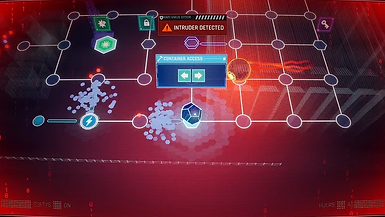
Action: The game has a lot of moments where there is tension, that usually within its mechanics, but also their characters interactions and relationships. This would appeal to the Action Profiles, as Dispatch not only challenges their players through calls, but sometimes with a hacking mini game, where the player has to complete a puzzles while being timed.
Audience Analysis:
Primary audience: The main target audience are young adults, from 16+, due to the immature themes in the game. Players who also enjoy games that are heavily based on narrative and choices will be a interested in dispatch as it decision making is its very core mechanic. Superhero fans who are want a refreshing story that falls under the slice of life genre would be apart of the primary audience, as it
Secondary audience: Fans who enjoy Critical Role, online content creators and celebrity fans would enjoy Dispatch, as majority of characters are voiced by different well-known people, which allows different communities interact with the game. Voice actors such Laura Bailey, Travis Willingham, Matthew Mercer play a huge part to Critical Role and have been in many other shows, such as The Legend of Vox Machina, and a brand new series, The Mighty Nien.
Niche audience: A nicher audience for this specific game would mostly likely value the art and style of the game, and how the game is presented. It is uniquely formatted as a TV show, which would appeal to both an inactive and active audience, as the active audience is there for the story-telling aspect of the game and the mini-games, whereas the inactive audience can easily go watch online content of the game, and just watch the animated sequences.
Visual Analysis:
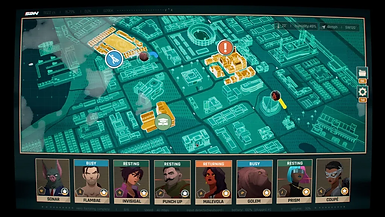
Dispatch's art style can be described as 2D animated visual novel, with very heavily influence on super-hero comic/graphic novels. The overall colour pallet of the game is very bright and bold, and yellow and blue seems to the main colours that represent the game.
the character designs are all visually interesting and unique, with with diverse shape languages and features of the characters that make them all unique from each other. There is however a frequent usage of yellow and blue on the characters, especially for Blonde Blazer. Water-Boy, Phenomaman and Chase.
This can represent how the whole premise of the game falls under the 'workplace comedy' genre, and that yellow represents how the game is funny and that there many characters don't take each other seriously. It can also be argued that the yellow can also symbolise how there can potentially be a traitor within the series, indirectly warning their players. The blue can also symbolise Robert, as it represent the meaning of trust, and as well as intelligence, while also having a double meaning of displaying the character emotional distance from others.
The games UI is very simple and polished, with the dispatch game taking place in the format of an old CRT monitor. This makes the players feel immersed into the role of Robert, and it makes the game seem authentic and real towards the player.


Visual novel
CRT MONITOR
Interactive film
Clean and Simple UI
Dead Cells Concept Art - Visual Research
How does Maxime Bonin effectively communicate his ideas through concept art?
Characters: The initial designs of his characters all have various designs that are slightly different from each other. He does this as it displays variety of the character, while offering a sense of choice to the developers to choose which designs they like the most. His designs are also often seen in gray scale, which only depicts the character's shape, form, posing and costume design. Bonin does side-views of the character to display more of the costume design. This is effective and useful towards people who would 3D model the character, as they could include the smaller details, and they can visually understand the structure of the face and body.
There is also some annotations around the art, displaying the process behind the designs, with supported concepts of different variants of a specific parts of the character and the props.
Environments: Bonin uses basic shapes as his first initial building blocks for the environment. A lot of his work is line-less, giving the architecture a sense of form and structure. Lighting is also taken into consideration, to display certain moods of the scenes, supported with contrasting and saturated hues such as purples and greens. This evokes the feeling of mystery and fear of the unknown of the world.
the environment concepts are also drawn in gray-scale to establish the composition and values of light and shadows within the world, this is an effective way to compose and form ideas, as it displays a sense of depth and how lighting hits certain objects in the piece, without the distraction of the colour. It is also easier to colour in the environments later, as the artist doesn't have to consider the values later on using bending modes such as overlays, multiply, and soft lights. This also allows the artist as they can change the colour pallet later, as it saves time.
Summary:
In conclusion, Bonin is a great example of effective visual communication when it comes to game concepts, as you are able to see the process behind the ideas he's trying to display, as well as exploring different alternative design to show variety towards the developers. His character design also display dynamic posing and shape-language, which makes all his initial designs different from the other characters He also annotates his concepts to document his creative process, and to communicate alternative ideas before presenting the final pieces towards the team, supported with character side-views/poses to show off more of the costume design.


Primary Photos:
Emmy
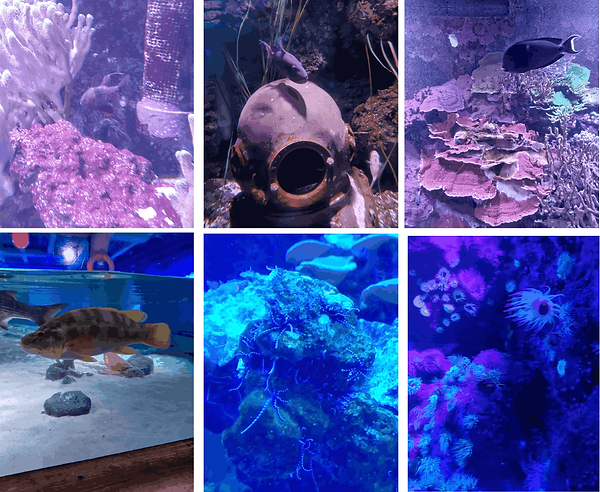
Before I started any conceptual work, I was asked to take primary photos to help inspire the project further.
I knew from my previous project before that I wanted to improve my skills in the environment design aspect, and I wanted to specifically work on that within the vertical slice project. My main goal for to try and make characters interact with the environment more and as well as convey unique ideas for the environment design in general.
I took some photos in an aquarium, trying to capture unique and eye-catching environments in the tanks. I saw a lot of different corals and aquatic plants, and I really liked the variety of shapes and forms that these plants had, and I think this would influence my work further, as we want to create unique creatures and potentially our own plant designs for the environment.
The colours of the environment was also something that I liked in these primary photos as one of us in the team are specifically researching biolumences, and I thought the way that the plants and environment glowed almost resembled that. This also inspired me to create a character concept that might potentially be an enemy/boss in the game.
RHIA'S RESEARCH
WHAT THE PROJECT BRIEF IS & HOW I WILL APPROACH IT
A vertical slice offers a fully refined part of the game, its purpose to attract investors and publishers to make the idea of the game become real. It also gives a selected audience context of what kind of game it is and if they are interested in purchasing the fully released version. A slice should include, concept art of the game, mechanics, sound design. As a final result the slice of the game should feel polished and consistent, showing the level, the story, functions and core details of the game. This project requires me to work together in a group together with students in the class. Which meant we would need to coordinate meetings, come up and communicate our ideas collectively as a group. For this project we will be creating a vertical slice of a game concept, this will include concept art, mechanics, visuals.
PLANNING & BRIANSTORMING
This project requires me to work together in a group together with students in the class. Which meant we would need to coordinate meetings, come up and communicate our ideas collectively as a group. For this project we will be creating a vertical slice of a game concept, this will include concept art, mechanics, visuals.
Since our games theme centres around the ocean and ocean creatures I have chosen to research, Nature Bioluminescence in our eco-system where I will look into the visuals and the context of the topic and the animated series Hilda, where I will conduct more visual research talking about the environment and creature art of the series
After, team roles where assigned, a group mind map was created using Millanote. This collaborative mind map made it easy to understand the directions our project was going in, a mood board was also made featuring creatures, backgrounds and game art that links to our game plan. The first meeting that was held confirmed the idea that out game would be focusing on an underwater ocean environment; your character would be able to unlock different types of biomes explore the world and uncover different types of creatures. In that following meeting we discussed topics that we would start researching, just so that no one would end up researching the same topics. I will be researching, Nature Bioluminescence, Greek Mythology and Hilda. These topics, just like our team roles can also change, people can add more topics or decided to discard some topics. Our work will then all be compiled into the Team Leaders website which will showcase all of our work we have created throughout the project.
BIOLUMINESCENCE
In order for species to obtain a glow they must have a molecule called Luciferin. When luciferin undergoes a chemical reacts with oxygen, light is then produced. There are different types of forms of luciferin, some can produce luciferase which then allows these creatures to speed up the pulse of light that is produced through them. Which can be used to alert other creatures of predator. Predators that have light will use this to their advantage, attracting prey into their trap. By researching how certain creatures with bioluminescence use their light as an advantage to them. I can then apply these characteristics to the mechanics of the sea creatures.
DEEP SEA CREATURES: SURVIVAL
Beyond 1,000 meters the ocean lies in complete darkness providing a perfect atmosphere for brightly coloured bioluminescent creatures to stand out. Deep marine life has bioluminescent because of the environment they are surrounded by, they need to adapt to their circumstances and because light is so scarce, they develop their own in order to survive. Having this light helps creatures to communicate with others and hunt in the darkness. The angler fish, has a unique way of producing light creating a symbiotic relationship with photobacteria a glowing bacterium, on their esca. This is the glowing modified dorsal fin that hangs in front of the Anglers fish mouth, which lures smaller prey into their mouths. Other marine life will use bioluminescence as a defence, squid being the most known for releasing a bioluminescent smoke screen effect that distracts predators giving them a chance to escape. A concept that could be functioned into the game would be that the player can create their own bioluminescent light but they would need to defeat a creature in order to obtain this item, creatures to have intentions to harm the player will try to lead the player with their light to another more dangerous path, if your character does take this path, they could escape by using a smoke screen with their items they have obtained.
A vertical slice offers a fully refined part of the game, its purpose to attract investors and publishers to make the idea of the game become real. It also gives a selected audience context of what kind of game it is and if they are interested in purchasing the fully released version. A slice should include, concept art of the game, mechanics, sound design. As a final result the slice of the game should feel polished and consistent, showing the level, the story, functions and core details of the game.Although the game mostly take part in the sea there might be some environments above the sea, land where the character can go out of water. In this concept various land places will have glowing algae surrounding the land that reacts the movement. When thinking of the visual colour pallet of the game I have applied the fact that because water observes warm colours the most and cooler colours will be able to penetrate deeper into the depths of the ocean that the bioluminescent glow of the creatures should lean more to blue hues. On the other hand, the game included made up creatures allowing for more creative freedom when choosing a colour pallet.
For my visual research it is required that investigate games, series, creatures and art pieces that tie in with the vertical slices theme. The context of the game, which is single player, revolves around being an underwater FPS game, the player is a marine professor whose main goal is to obtain information on as many sea creatures leading them to unlock different part on the map, since the games story is still in its early stages the narrative of the game and concepts of the it can shift.
STU HARRINGTON
Stu Harrington is an advance illustration, design and director, he has worked on art for the game SMITE as well as Hearthstone. In this case I will be analysing his art piece called, Sirens Song Cliodhna. I was intrigued by this piece specifically because of the focal piece, being the large sea creature, this piece comes with three concept arts showing Cliodhna, with a summary displaying her personality. In this piece I will be analysing, the environment, the character, colour pallet and what features from ocean creatures Stu has taken and incorporated into his own designs.

My attention was first drawn to the sea monster Cliodhna, which I consider to be the piece's center point. She is depicted with a sinister smile on her face and an outstretched hand, which directs my attention to the next subject, being the deep-sea diver who is oblivious to the great danger that awaits him. Unaware, he is focused on the treasure that he had just found, that is surrounded by a shipwreck. I can assume that this treasure is from the shipwreck, which has been torn and broken down. The wreckage of the ship almost seems to be set out as a trap, as if it’s encapsulating the deep-sea diver for his final
moments. Shipwrecks are seen negatively regardless of whether they are caused by elemental factors, an object hitting the ship, or other mistakes. Which only lead me to believe that something negative will happen to the sea diver. Fish are seen hovering around the shipwreck in the shadows indicating that they are aware of the danger of getting too close to the treasure or Cliodhna the only thing being visible is their silhouette and glowing eyes showing that they are not the main focus.Cliodhna exhibits a humanoid appearance with unique and distinct features that reflect the surrounding aquatic life. The angler fish and tentacles that simulate hair are the most noticeable features. Angler fish are seen as one of the oceans creepiest fish, having sharp teeth and mouth in the shape of a constant frown and an overall, ugly appearance and there most iconic feature being their illicium, the dorsal fin that hangs in front of them as a light. Cliodhna’s character design has sharp triangular features making her seem more intimidating and powerful. It is made clear that she is some sort of sea monster. Her sharp teeth reveal that her character is mostly carnivores, helping with stabbing prey at first contact. Cliodhnas has an illicium in front of her face, she also seems to have adapted other glowing dorsal finds that run down her back, perhaps to attract more prey. Her colour pallet is mostly dark blues and green blending into the sea background, her bioluminescence streaks on her contrasting that. Cliodhnas hand phases through the ship, her action suggesting that she is about to grab the deep-sea diver. Her ability to pass through objects as though she were composed of a fog intrigues me. This may be something to think about and apply to some marine life. like how Stu portrayed Cliodhna as a sea monster, giving her a large sword that is just as menacing as her with a variety of marine traits.
BIOLUM
Biolum is a single player game released in 2021. It’s a 30-minute sci-fi narrative that requires a VR headset to play. It takes you on a journey to explore the depths of the ocean where your player uncovers luminescent parasite that are infecting the deep oceans eco system. Your player is voiced by Dominique Tipper, the other player guiding you Eva a marine scientist is voiced by Charlotte Rampling. The game is available on steam in the languages English, French and Chinese.
Biolum is a Virtual Reality game taking place in a deep ocean environment. For this piece of media, I will be researching the aquatic life designs since they are mostly bioluminescent, and the fascinating creature designs. Then I shall investigate how the player, and objects interact with one another cohesively in the game, as well how impactful of the game’s storyline, how it is effectively told throughout the gameplay, and how the context and ideas from this game can be adapted to the narrative or the groups vertical slice. Biolum perfect ties in with the themes of the Vertical Slice, being marine themes, for this game I’ll note down any ocean terms used into the game that could prove to be useful in the context of the game. It is a short underwater sci-fi horror game, from the beginning it is established that the player is marine biologist, Rachel, having communications with an Expedition Professor, Eva who has sent Rachel on a mission to explore a obtain newfound species, life and plants. As the game continues the professor Eva explains to the player, Rachel, the mechanics introducing them in a natural way, a red line is sometimes used to navigate the player throughout the game. When the red line is not guiding the player Eva communicates to Rachel though the suit where she should head. A cool dark ocean themed colour pallet of blue, green is corradiated well with the games landscape, underwater sounds such as the movement of fish and natural ocean life, like geothermal vents the makes player feel truly immersed into the game. Biolum exclusively being VR adds to the emersion of the game, with the player only focusing on the virtual environment in front of them, after analysing the game I’ll write the pros and cons of Biolum being a Virtual Reality game.


The game begins with our character noticing a Rattail fish with luminescent skin, our character follows this Rattail fish leading the character to the first scene where the marine scientist spots something intriguing. The Rattail fish circles and lights up its body in flashes communicating with the kelp, the kelp then moves creating a doorway for the fish. This is the first time our character has seen call and response from a plant and a fish. Amazed by this newfound information Eva orders Rachel to take a piece of the kelp. In this image there are no complementary colours, most colours being analogous, with shades of lights and darks. A main source of light coming from the kelp. It's interesting that the kelp is illuminated and almost seems supernatural for it to glow. The atmosphere gives a sense or magic and whimsy, the game taking place in a cave feels slightly restricting for what our character could be exploring providing a sensation of confinement. I find the interaction with the kelp and the fish interesting and that this could be utilised in the vertical slice that is being created by having plants guard an area that restricts the player from entering can be a good use of a gateway that is not so obvious. The player can observe how fish are able to enter the gateway of plants and try to replicate for themselves in the game. Plants can also be applied as a trap for humans, keeping them stuck in one place or to be used as a device to take energy.
In the following picture, Rachel enters another portion of the cave, which has been covered in brightly coloured luminescent tube worms which are glowing red, a pleasant contrast from the cool colours the player encounters throughout the game. The cave remains confined, showing the player the route they need to follow in order to continue the game. Biolums game narrative bases around a liner pattern.As you continue in the game your character will enter various place that reveal to be more spacious areas. This is when red line appears guiding the character where to go, the game forces the character to move forward, and once the character enters a different part of the game, the player is unable to return to the previous area, acting as a closed gate in Biolum, thus helping for the story of the game to continue. When Rachel enters another part of the cave she comes across giant tube worms, abundant in deep sea areas. Eva informs Rachel that the giant tube worms don’t emit light, this adds further confusions since something must be giving the kelp and tube worms their luminescence. The tube worms, just like the plants, act as barriers for the player, denying them access to enter further into the cave system. Tube worms being glowing red can associate this path to danger. Making me wonder if they’re is a reason why species that emit light are allowed access to enter in, perhaps instead of the tube worms acting as a force against the player they act as a warning informing the player that their in fact is a reason why only luminous creatures are allowed entry. Throughout the observation Rachel realises that the tube worms retreat when the blue wood lice crawl near them, acting through light communication, with the information by shining a brighter light toward the tube worm’s they react the same way as when the wood lice crawled near them. This mechanic of objects reacting to light can be morphed into our game, possibly adding other feature like objects reacting to sound, this relates to a different research topic that another group member is working on. Sounds a such as whale calls, ocean sound or horns can all be used as a reaction.

In this section of the game, Rachel enters a more spacious area of the cave which is covered in glowing vegetation and species as well as underwater stalactites and stalagmites. This place is less lit up than the previous parts the player has explored, there is a darker section in the far distance of the large portion of the cave that almost seems menacing, suggesting that something larger might be lurking there. A slight fear of the unknown. These sharp stone formations take an appearance of looking like sharp teeth, making the cave look hazardous and an area that could be bad to venture inside of. Our game environments can reflect the type of place the player is in by incorporating jagged and dangerous shapes like these. The red line also appears in this section of the game guiding the players so that they know where they’re going. Guides for the player can be useful however our game may use more subtle ways of guiding the character throughout the world maybe instead of having a bold red line there will be flashing luminescence creatures.
The species in this photo shows a fish with glowing wings, it’s then uncovered that this species is some kind of fang tooth fish. A deep sea fish with large teeth and small fins in comparison, what has happened here is that the fang tooth fish has been fused with the luminescence kelp by a parasite that has given it the power to merge with other organisms. By the parasite giving the find tooth fish larger fins it is able to become more useful to itself .The species that Rachel has found are in fact not new species but sea life that have been evolved into a new form. The idea of fusing entities together to create mutant life is definitely an interesting concept. Giving me the idea to use this in future concept arts for the vertical slice. Additionally, species can utilise this to earn new skills that could be used against the player or to power up. The final species and image of the game that I will examine is the focal point of both species for the players at the

conclusion of the game. Given that this species appears to be a hybrid of several species and has larger characteristics, we can deduce The species that gives all the other creatures a reminiscent design is incredibly intelligent. Instead of having a single colour, I believe that the creature should have had more dark portions against its luminous elements to make it stand out. The principles I discovered in the game, Biolum and the concepts of mutating lifeforms together will likely be incorporated into the verticals slice regarding concept art.The colour scheme for Biolum was not very diverse, but I will develop a concept with more various colour schemes for the vertical slice. Since blue is one of the hues that can penetrate the deepest ocean depths, I believe the colour scheme's exclusive use of blue was done on purpose in an effort to
make the game appear as authentic to it’s ocean environment as possible. Biolum is only available for players who have a virtual reality headset and it’s not available for players who don’t have that type of equipment which means this game can be hard to reach a wider audience because they would have to make the extra purchase of the headset to play the game. The narrative of Biolum is relatively short, but this could have been done on design because prolonged usage of virtual reality headsets might result in headaches. Personally, I believe this game would get more popularity if it were made to be played on a computer or console.
HILDA
Hilda first started off as a graphic novel series created by Luke Person. The first comic called, Hildafolk was published in 2010 following the adventures of a teal-coloured hair girl exploring the world, who once lived in the countryside and now is having to adapt a new environment called Trollburg, a small walled off city where unlike the countryside is very populated. Apart Hilda, Luke Person has written and illustrated another graphic novel called, Everything We Miss which leans to a more adult audience, exploring the dying days of a failing relationship and how we can become something we never swore we would become. Hilda was then adapted into a cartoon that featured as a Netflix original debuting in 2018. Since the series of Hilda explores so many new and interesting environments, I’ve decided to create a mind map showcasing the different setting and creatures from the world of Hilda. What I have discovered is that the colour pallet used in each scene will consist of warm natural earthy tones with a mix of warm oranges and grey distributed into the scenes giving the whole animated show a rustic feel. An earthy tone colour pallet was most popular in the 70s and 80s and people will often connect the use of these hues to warmth, comfort, harmony and balance. Hilda's colour scheme is made up of two opposing hues, orange and blue, which have been separated by a yellow scarf she wears. The use of yellow makes Hildas character have more dimensions marking as the accent piece. This technique is repeated in the environments. The blue in Hildas colour pallet can be seen as a complementary colour to the rest of the world. The raw material of the colour, when not influenced by harsh lighting or shadows all have a similar colour to the main characters Hilda. This method makes the world feel connected to the main character, and that the character is meant to belong there. Having distinct colours also make it easy for show to be distinguished next to other colours in different shows. For instance, the colour of the Power Puff Girls is bright, and neon, pink, blue and green are a reminder of the main characters, these bright colours would not be seen in the world of Hilda.
As an illustration, the background homes adopt the colours of Hilda and Hilda's mother, Johanna. Johanna's hair's shade of brown had been used as the wood of the houses, while the rooftops consist of the warm orange and blue in Hildas design. Rather than applying a pure white, a tint of yellow that highlights the window over all brings a softer touch to the surroundings.


Magic in the world is shown with bright white light and a neon colour surrounding it, this deviate from the typical colour scheme used in Hilda. These enchanting colours give the audiences eyes something fresh to look at, additionally making it stand out as an abnormality to the world which is fitting since it is a supernatural ability. Kaisa a witch disguised as a librarian, has dark colours and purple hair, her character design stands out from the rest of the scenery constructing a visual variation. In the same manner this can further strengthen her importance in the show. This can then be useful to the vertical slice by emphasizing subjects of relevance in their environment, Kaisa is a librarian because witches need to be sufficient in knowledge. By giving her a place and a signature look it creates a connection to the character.
In the next shot, the audience gets a clear view of the scenery, unveiling an area with books and staircases, the place reminding me of a magical castle with what I can assumed to be witches roaming the area. This section has a less warm and cooler hue to it. A gradient is used in the middle of the landscape creating a soft spotlight effect to it, white specs are seen floating in the air creating an enchanting touch to the landscape. The same spotlight effect and white specs are seen again in another area of this realm. The spotlight instinctively draws my eyes to focal point of the image.


Various creatures are featured in Hilda. Some of these creatures being inspired or taken from folklore. The Nissa is a Nordic household spirit that do chores around someone’s house expecting to be rewarded. In the animated show Nissa are seen as creatures that can travel between two dimensions, nowhere space, a dimension only Nissa can enter and a place where they can store objects that the humans no longer use. From this dimension the Nissa can travel into people’s house. Nissa are given full access to this dimension, but they can transport humans into the Nowhere space if they hold their hand while entering the space. In this image holes surround the walls, these places can be used as entrances or exits to the house. While the Nissa are not designed for the transportation of humans, there is evidence of aquatic creatures and spirits that are.
To illustrate, this water spirit may be summoned by blowing into a conch shell. The water spirit can morph its body, in this case by forming steps onto the side of its body, allowing two characters, Hilda and Freida, to climb up and sit on the water spirit to go to the other island. The water spirit can additionally transform into an air bubble, which allows the protagonists to travel underwater. The next sea species I will be is analysing is an Island, this was revealed to be a giant kraken. This creature is covered in multiple eyes; its teeth are layered within its large mouth creating an abnormal but fitting look for the species on display. Its shell that is disguised as an island is jagged; these sharp characteristics makes it seem scary and frightening. Due to its colossal size the Kraken can damage multiple ships. In the same episode it is revealed that that the younger krakens, that resemble the form of large rocks, live off wood and that they are seen around shipwrecks.


The first environments are dark, hues of green and blues used to show that, the area seems take its appearance from a swamp. Trees surrounding with moss, which thrives in wetland and humid environments found covering rocks. The next indicator that this area is humid is the slight gradient that appears surrounding the swamp, replicating a warm mist. What makes this swamp seem unusual is the pile of rocks stacked upon one another, defiantly not a natural formation. Meaning that something or someone that resides next to or lives in the swamp must have arranged the rocks to that shape.
For the second setting, the land is much lighter, shades of pink and orange covering the land. There's a peaceful ambience to it, unlike the swamp the area seems refreshing. The rocks appearance is shaped in a pyramid shape, despite that these rocks were formed naturally. The environment here is part of another dimension, that had been accessed by nowhere space. The colour pallet being very similar to the tunnels in nowhere space with the same soft warm colours. The mountains and rocks being shaped so abnormal compared to other mountains in a regular environment create an almost unearthly sense to this land.
While the two environments both have a very clear difference in colour pallet to them, both give of a sense of magic and wonder. I’ve found that the green and blue pigments often resemble action and adventure, whereas the pink and orange pallets simulate a feeling of calmness and tranquillity. These colour schemes are seen repeatedly in Hilda; they work so well at setting the audience in an emotional state subconsciously, linking colour to a feeling. It works because as humans we are designed to see colour and link it to different means. Blue is sad but is also a stress reliever, red is the opposite standing out to make a statement.
From Hilda I want to incorporate the colour pallet into my designs, as well as dimensions and how that could work for our game. I’ve considered that by adding dimensions and worlds could open or game up to so many other environments, not just the ocean.
PRIMARY PHOTOS


These photos I have taken underwater showcase marine life, coral and a ship wreck. Its clear that the shipwreck has been left sunken in this environment for quite some time, as life and fish has taken inhabitancy, showing how these underwater creatures learn to adapt when a foreign object enters beneath the sea. Even though the reason shipwrecks occur is tragic it can provide a platform for life to grow, in these photos’ algae, fungi and other sorts of bacteria form onto the ship, with these different types of coral take form upon the ship. Small fish that are seen as prey are the next life form to hang around shipwrecks as this provides a safe artificial habitat this fish can take shelter when hiding from predators. The shipwreck shown in this picture has been found near the surface of the sea meaning that the ship is more likely to deteriorate faster than those found in the deep dark of the sea since deeper waters don’t have the sunlight and constant motion of waves to speed up their decomposition. Referring back to my previous visual research, in Hilda the baby krakens are seen eating the remains of shipwrecks. Also, in Sirens Song Cliodhna smaller fish, that are probably prey, are spotted at the edge of the shipwreck taking shelter from the larger predators. For our game if there is a level where a shipwreck is in the environment, I think that having smaller fish gathered around shipwreck places mimics real life and could also serve as a place where the player could study a collective of fish.
Next, I have taken pictures of different types of artifacts, sculptures as well as some bleached coral. The Amerindians believed in the spirit world represent in the artifacts called Zemis. These objects
take the form of being large or small, taking the appearance of human and animal. These sculptures could be made of all different types of material, but most commonly, wood and stone. The objects made where believed to embody the spirits of the supreme, omnipotent beings, ancestors and forces of nature. They where then worshiped as providers, frequently consulted for knowledge and given food as offerings. Major zemis were housed with chiefs, shamans, healers and soothsayers, this was so that they could “communicate” with spirits, these important people who religiously believed in Zemis would fast, inhale narcotic powders made from plants and offer food and narcotics that would be placed on top of the flat surface of large Zemi structures. From my findings I’ve considered that higher beings or statues that are worshiped can be structured into our game. I’ve suggested the idea in a previous production meeting that items, such as shells and small sculptures can be used as currency in the ocean world, the idea of having shells with currency carved into it can represent the price of some types of shells.

The next photos are all taken from inside of caves, currently the game consist of five levels. Coral reef, mermaid city, Icy place, a dark deep bioluminescent spacy space and a final boss area, each level gets harder and harder for the player as they are introduced to more hostile creatures, who are looking to harm more than help. The caves images are full of stalactites, flowstone. Stalagmites and columns. From the appearance of the environment, I’ve considered that the Icy place will best suit the appearance aesthetics of the Ice level of the game, since the stalactites and stalagmites remind me the
most of icicles. An idea that I have for this specific environment in the game is the stalactites being sentient slowly growing closer to the player while the player isn’t looking at them wanting to get closer to stop the player from diving deeper into the ocean. Some of the other creatures in the icy realm can try to stun the players movement leaving them vulnerable to other creatures and the Icy stalactites. This area is the transition from the icy place to the dark bioluminescent place, so for some of the creatures in my concept art I may combine Icy creatures that are able to produce light. The images of the cave give a slight discomfort especially for places that lack natural structure, it almost feels that there should be something there when there isn’t. The icy place looking creepy and almost barren can make the player wonder if there is something that they should be looking out for. This environment can contrast the higher easier levels of the game which are full of life and bright colours.
OCEAN ODDITIES
Our studio name has decided to be, Ocean Oddities. Red, one of our team members has created a logo in our third team meeting a collaborative website was made. This sight made it so that everyone could on the team could place their work, it was like the mind map except more refined and in depth with the research, production and content of our game. Once everyone on the team had finished with contextual and visual research a physical mind map was made. On this map we investigated different story ideas, where given tasks and created a level system. The game name was then chosen to be, AMALGAMATION which is the process of joining two or more organizations together to form one large organization, this title is fitting to the premise of our game Amalgamation since it’s all about creatures that have been fused with other creatures, plants, objects or food.
As of right now, Ocean Oddities has 5 levels, on this journey the player is accompanied with Six non-player character on the submarine. These characters each playing different roles. By interacting, the player can learn more information about the biology of the underwater world, receive upgrades to certain gadgets, explore ruins underwater, learn about fusion of creatures, receive antidotes and unlock new recipes Accompanied with this are the characters contrasting personalities which the player can observe and take part in by making certain decisions that can affect how these characters will treat you further into the game.
The design work of the assignment I needed to create 2 non-player character deigns they would accompany the player on the submarine, 3-4 finished creatures for the ice and bioluminescent zones, items that the player obtains along with items found in the existing environments and the interior of the submarine. I’ve approached this by starting off with the easiest pieces making my way to the more technical pieces. Additionally, I’ve created some physical pieces crafted out of clay, if I end up liking the design I can create it digitally the advantage of having a character turn around that I can hold.
ELS' RESEARCH
MARINE CREATURE SOUNDS
When people are told to imagine sounds regarding the ocean, they typically turn to bubbles or crashing waves. However, there is more to the depths of the ocean than these common sound effects. Various marine creatures use sound to communicate and navigate the underwater environment, and the tools we possess nowadays have been able to pick up their strange noises and analyse the soundwaves created.
I decided to research this topic because the game our group intends to make involves an underwater setting, filled to the brim with unknown enemies and unsettling encounters with odd creatures.
ATLANTIC GHOST CRAB - OCYPODE QUADRATA
Found in tropical areas, these crabs are swift creatures with pale shells that match the sand; they require seawater to wet their gills often, but cannot remain underwater for long periods of time as they are semi-terrestrial.
They scavenge for carcasses washed up on shore, and remain hidden in their burrows during the hottest days.
However, they are able to survive comfortably in a wide variety of conditions, only really affected negatively by human activities such as building seawalls.
Using their body parts, they create unique sounds to communicate. By rubbing their claws or legs together, the ridges collide and a grating noise is made. Similarly, by stimulating the teeth inside of their stomachs, they can make an odd, crunchy growl occur.
ATLANTIC CROAKER - MICROPOGONIAS UNDULATUS
Found in freshwater creeks and coastal waters, these silver fish grow up to twenty inches and can weigh up to five pounds. Due to their large population, they are a staple food for Indigenous Americans and a common catch for those fishing recreationally.
They feed on worms and small fish, and are very dependent on the conditions of the areas they inhabit.
The name 'croaker' describes the sound these fish create. When under threat or attempting to impress a potential mate, they are able to vibrate muscles against their swim bladder, the bladder acting as a chamber which amplifies the low croaking noise created.
NASSAU GROUPER - EPINEPHELUS STRIATUS
Discovered living near coral reefs, this large fish is covered in dark patterns and can weigh up to fifty-five pounds.
They prefer swimming in deeper waters in solitude, feeding on smaller fish and any crabs that happen to pass by.
These fish only gather together during December to mate in masses, using the same location each year.
Due to overfishing, pollution and invasive species of fish, the Nassau grouper is in a critically endangered state.
When searching for a mate, they create low frequency sounds and grunts, most likely using the same method as the Atlantic Croaker; vibrating muscles against their swim bladder.
BIGEYE SCAD - SELAR CRUMENOPHTHALMUS
Typically living in tropical regions, these fish are bluish-green on their backs and white on their bellies. They feed on invertebrates and larvae, travelling through the ocean in schools. Since they remain close together and are often in large numbers, they are fished commercially for human consumption.
When under threat, they use teeth located in their gills; they are ground together to create a low frequency, rasping sound that expresses fear or pain. They often make this noise when captured in nets by those fishing commercially.
HUMPBACK WHALE - MEGAPTERA NOVAEANGLIAE
Humpback whales are found all over the oceans, living off massive crowds of krill and small fish by swallowing them in bulk. Though not endangered anymore, humans did lower the population of humpback whales to a worrying point through hunting for their flesh, blubber, whalebone and a particularly valuable substance known as ambergris - formed in the bile duct and used in old perfumes to enhance the scents.
Due to their horizontally positioned vocal folds, they are able to create underwater calls to their partners and young calves. Their melancholic songs can last for four minutes to half an hour, the whales using the echolocation properties to locate others of their kind. The sounds they make vary from low-pitched groans to high-pitched shrieks, each a different way of communicating.
ANTARCTIC MINKE WHALE - BALAENOPTERA BONAERENSIS
Found in southern Antarctica, Minke whales primarily live off groups of krill like most other whales.
They are narrow creatures, mostly grey with a white underbelly and a long, pointed nose. They are often preyed upon by killer whales in the Southern ocean, the survivors obtaining deep scars on their bodies and flippers.
These whales produce a bigger variety of sounds than the Humpback whale; whistles, clicks, and screeching are the most prominent, but they can also create low frequency noises known as downsweeps, pulse trains and 'bio-ducks'.
Mating and feeding are events that cause Minke whales to call to each other, attempting to find suitable mates or revealing the location of food to their partners and young calves.
BELUGA WHALE - DELPHINAPTERUS LEUCAS
Living in the Arctic ocean, Beluga whales have an all white body that allows them to disguise themselves against the many icebergs floating around. They have no dorsal fin, enabling them to move freely and easily under planes of ice.
They are social creatures, thriving in groups and becoming lonely when separated for too long. Though slow swimmers, they are able to dive deep; their diet varies according to how far or close they are to the surface, and the seasons. Through foraging, many edible items are found including octopus, small fish and crabs.
The Beluga whale has a large amount of soft tissue on its forehead known as a 'melon'. This feature enhances echolocation, allowing the whales to distinguish where gaps are in the ice to breathe and who else is nearby.
They mainly create clicking noises that pass through the 'melon', letting them project the sounds in a particular direction.
ENVIRONMENT SOUNDS
Though marine creatures fill the ocean with plenty of noise, natural environmental elements often do the same. Whether it's a natural disaster or simply the weather above the surface, these sounds travel through the water and alert animals and humans alike.
SUBMARINE VOLCANO
Located beneath the seabed near the edges of tectonic plates, these fissures can erupt underwater.
They spew magma quietly due to the pressure of the water above, rather than erupting aggressively. The cool water causes the lava to solidify quicker than volcanoes on the surface, a firm crust forming around it whilst fresh lava flows into the middle to create a pillow-like object.
Marine creatures are able to adapt to this hot environment deep in the ocean, the heat providing good insulation and the toxic gases able to sustain some forms of life.
Submarine volcanoes do not create much sound, the immense water pressure constantly stifling noises in the deep. However, when they erupt they may effect the environment around them, causing rock and sand to tumble aside and vegetation to melt into the lava. This makes a crumbling, crackly noise, muffled but still detectable.
EARTHQUAKE
When tectonic plates under the seabed press and slide against each other, they sometimes catch or cause a displacement of surface material. This causes an underwater earthquake, often leading to a tsunami due to the shift in water volume. These earthquakes can disrupt marine life and their carefully crafted habitats, rock crumbling and cracks forming across the seabed until the tectonic plates settle.
Earthquakes tend to be very loud on the surface, as they knock down plenty of structures and form splits in the roads; the same can be said about underwater earthquakes, except these sounds are muffled due to the water pressure.
The noises consist of rock scraping against rock, ocean mountains crumbling down and the cries of threatened creatures fleeing the scene.
STORMY WEATHER
Instabilities in the atmosphere cause storms; when cold and warm air masses interact, a low-pressure area is created and this forces the warm air to rise, prompting the formation of clouds that lead to heavy precipitation, lightning and thunder.
Though thunderstorms are up in the sky, they can still be heard down below in the ocean. The rain hitting the surface of the water creates a crisp, pattering sound, paired with the heavy crackle of lightning and rumbling of thunder.
The rhythmic noise of the rain in particular creates a sense of comfort for some people. In addition, low-frequency sounds are proven to reduce anxiety and promote relaxation, meaning the low-frequency growl of thunder provides a soothing effect.
TSUNAMI
Underwater earthquakes are often the cause of tsunamis; the displacement in water volume creates strong waves that wash out from the epicentre of the quake, travelling towards any unsuspecting land nearby and engulfing it in a massive wash of ocean water. The force of this water and the pressure experienced when underneath can cause death, humans unable to avoid the large wave if a need to evacuate has not been declared soon enough.
The sound of a tsunami is prominent due to its size; the crashing water resembles that of a normal wave, just much louder and chaotic as it collides with surface structures and topples them. Underwater, the splashes and crashes are simply more muted.
TRAPPED AIR BUBBLES
Bubbles in the ocean are formed when waves break on the surface of the water, mixing with the oxygen above and pulling small amounts down that collect in spherical bubbles. When cold masses of water are touched, the temperature difference causes the bubbles to sink lower, taking them longer to reach the surface again. This process ventilates the ocean, providing marine life with a suitable habitat without keeping the seawater too dense.
Bubbles may collide and break into smaller ones with muffled popping sounds, the water swooshing around them as they rise back to the surface.
MARINE VESSEL ENGINES
The sea is traversed by an increasing number of ships including cargo ships, tankers, cruise ships and fishing vessels.
These large objects cause noise pollution that negatively effects marine life below, confusing their communication methods and echolocation skills. This means they are unable to find their way around the ocean depths, also failing to converse with potential mates or let other creatures know about food sources.
Engines create whirring, rumbling sounds, projecting the noise down below as they travel for days or weeks across the ocean to capture fish or deliver goods to other countries. Waves crash against the sides of the vessel as it ploughs through the water, disrupting the currents.
SEISMIC SURVEYS
A method of investigating underwater structures, mineral deposits and natural gas sources, seismic surveys are carried out by scientists who analyse the pulses reflected by the soundwaves projected to obtain valuable information.
Though useful for explorative purposes, these surveys are a form of noise pollution that are upsetting marine ecosystems that rely on sound to communicate with their mates, find food, and navigate their habitat.
Seismic surveys are difficult to distinguish underwater, the noise small but with a significant impact on the environment around it. They create a low-frequency buzzing sound, sometimes crackling.
WATER-THEMED GAME SOUNDTRACKS
Many videogames contain underwater levels or beach environments, using carefully crafted music or songs to provide a more immersive experience rather than just having waves or bubbling sound effects. Instead of just having simple environmental ambience, musical instruments can be used to portray certain ocean features; for example, crashing waves could be represented as cymbals, thunder as drums, and seagulls flitting across the sea as flutes.
ZORA'S DOMAIN - THE LEGEND OF ZELDA: BREATH OF THE WILD

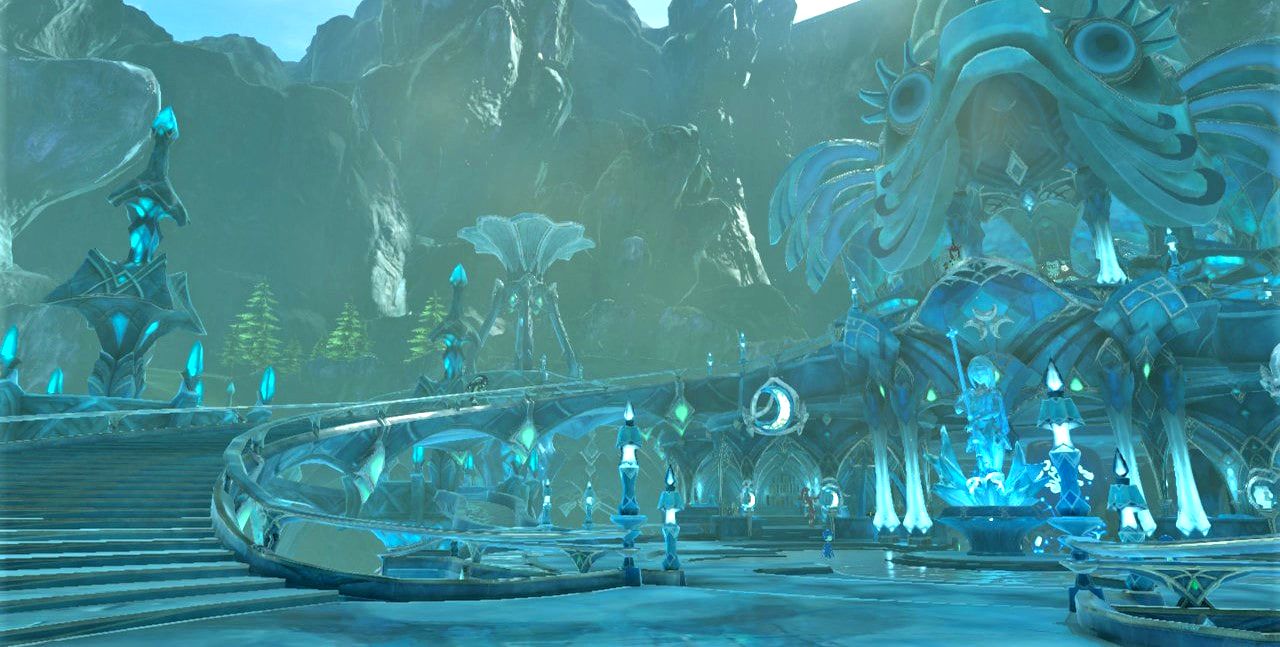
In this open world game split into several kingdoms, the player must control a Hylian knight and bring back control to the divine beasts guarding the lands through exploration, and gathering of special items and information. Visiting Zora's Domain is a large part of the main story in 'Breath of the Wild'. Filled with a race of tall, shark-like creatures that thrive in cold, watery environments, the ocean-based area consists of smooth, glowing structures and numerous waterfalls.
Those that created the soundtrack - Manaka Kataoka, Yasuaki Iwata, and Hajime Wakai - wanted to convey the freedom of flowing water and cultivate a mystique surrounding the Zora origins.
The track opens with a soothing flute tune and dragged out piano notes; this represents the soft streams of water that travel down sloping gutters and delicate fountains within the domain.
By singling out certain notes and giving them time to echo, a simplistic but sweet sound is formed. Simple things are often associated with purity and naiveness, linking to the fact that the playable character, Link, has lost all memories of the area and is therefore in a vulnerable state. Since the player has been with Link from the moment he was resurrected at the start of the game, they naturally sympathise with him and are able to feel some of the emotions conveyed in the soundtrack; this causes them to gradually understand the state of being innocent and unknowing of the surrounding world and its complex history, in turn sharing Link's desire to rediscover the information that was erased from his memory.
The piano continues, merging with a synthesizer to create a somewhat futuristic melody; the strange, atmospheric sounds reflect the rich culture of the Zora and how beautifully developed their kingdom is beneath the surface. Throughout the track, various chimes and bells toll between loud and quiet, providing a sense of drifting in and out of consciousness; it gives Zora's Domain a dreamlike feel, reminding the player that it is unable to be accessed like a normal village and is detached from the usual network, peaceful and thriving in its own way.
The harp and guitar are used intermittently, enhancing certain parts of the track to provide some liveliness; the slightly louder tunes are reminiscent of splashes, showing that the water does not only flow in one direction but is altered by movement of the Zora or anyone who enters the ocean depths. The large range of instruments included so far exhibits the diversity of Zora's Domain, giving a sense of welcomeness to all creatures, regardless of the fact that some live on dry land.
The synth notes and soft chimes dance well with the guitar, harp and piano throughout the piece, each instrument complimenting the other to form the unique flow of the watery environment that is Zora's Domain.
DEEP BREATHS - NARCOSIS
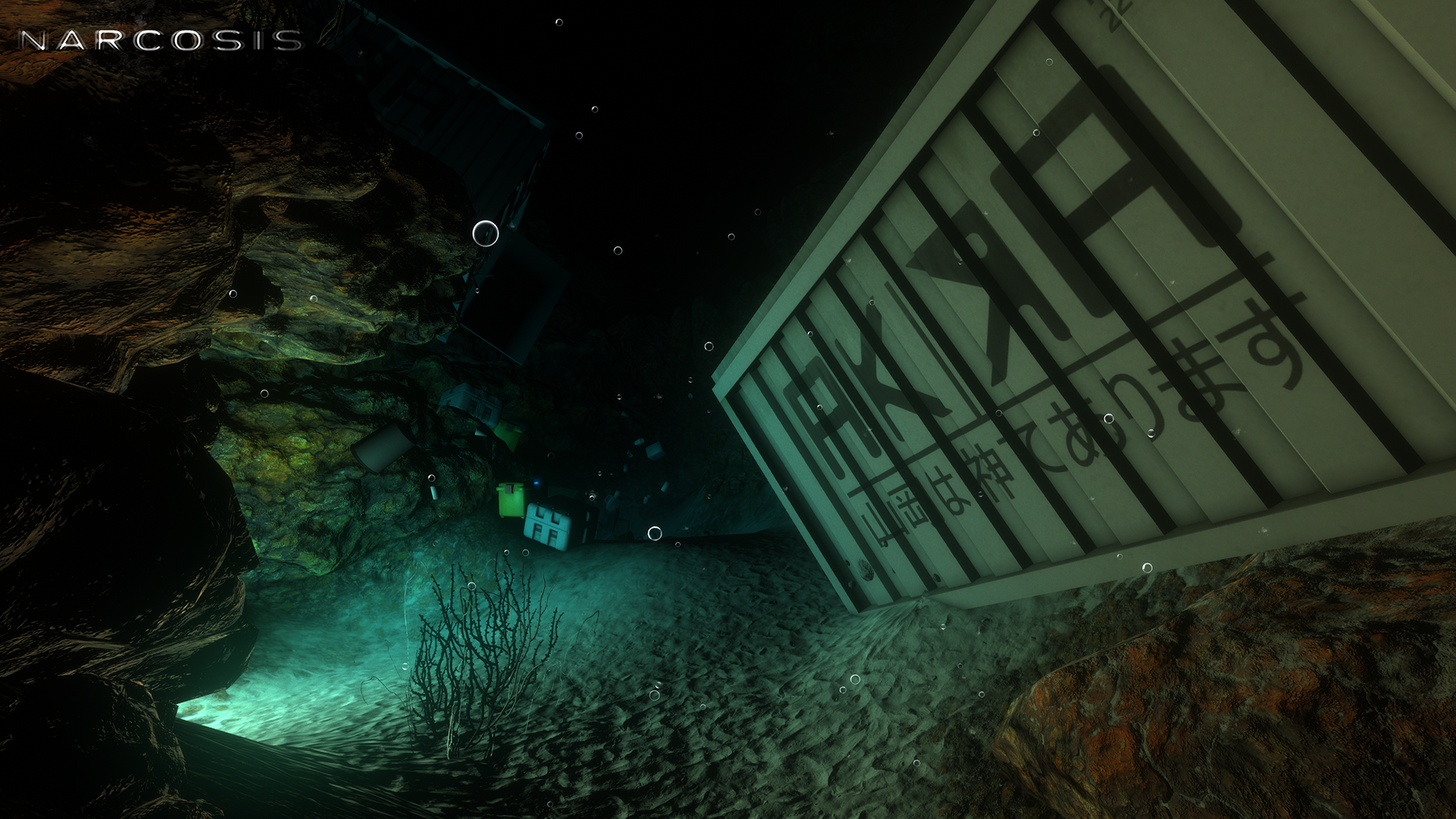

Set in the ocean depths, the player controls a lost diver struggling to reach the surface with his life and sanity intact. Since the deep sea is cold, dark and mainly unexplored, the themes of isolation and fear are prominent and greatly enhanced by the soundtrack produced by Gisula.
This track opens with the pulsing tune of a synthesizer, mimicking the panicked heartbeat of a person in fear. This projects onto the player, causing them to feel an impending sense of doom that lingers throughout the game as they navigate the murky depths alone.
Distorted piano notes plink into existence, the echoes providing a sense of being in an empty, cavernous space; this highlights the feeling of isolation for the player, reminding them that they are truly alone and unreachable in the deep ocean. In turn, this causes anxious emotions to heighten as the player realises they are incapable of receiving help from this position underwater.
The heartbeat-like pulses gradually grow in volume until they reach a peak, the piano creating a soft echoing tune that varies in pitch and repeats. The repetitive nature forms a sense of urgency, as if the tune is an alarm that cannot be turned off; it shows that timing is an essential point of the game, as being underwater means the player cannot breathe and any available oxygen tanks will eventually run out. This realisation and urgency adds to the fear, the constant echoing ambience an anchor that provides an immersive experience for the player.
Nearing the end of the track, the pulsing synth notes and piano soften, giving the impression of the diver fading into unconsciousness as they run out of oxygen. A moment of eerie silence finishes the music, symbolising that there is 'nothing after death'.
SEA 1 THEME - ENDLESS OCEAN - LUMINOUS


Composed by Ayako Saso, Shinji Hosoe and Takahiro Eguchi, the first generic sea theme plays when the controllable diver enters the calm ocean.
The track begins with a build-up of synth notes and string instruments, all coming together and increasing in volume for a moment until the vast ocean appears before the diver.
The high pitch proceeds down to a lower one during this moment, and this begins a repetitive tune that alternates in tone with soft piano notes, modified to produce a space-like twinkling sound. The unique mix of the synthesiser, string instruments and piano exhibits the diversity within the ocean presented to the player, capturing a sense of being overwhelmed yet also at peace with the tranquil, blue space before them.
A small scale moving down in pitch is played, then cymbals crash smoothly, resembling the sudden splash of waves on the surface filtering into calmness once more.
The middle of the track portrays the grandness and sheer size of the sea by using a soft, low trumpet. The association of trumpets with royal entrances links to the importance and complexity of the ocean, giving the player a sense that it is much bigger than it appears to the eye; bigger than them, and harbouring an abundance of secrets and creatures to discover.
The cymbals crash again and the string instruments create a different tune, providing a break in the music that represents the diver taking a moment to gather their thoughts and feelings regarding the massive, peaceful space surrounding them. This gives the player time to be in the diver's shoes, empathising with the fact that they are unable to determine the size of this unexplored sea, therefore feeling overwhelmed and impressed.
The cymbals sound a final time after the change in music, moving back to the repetitive synthesiser heard in the beginning. This symbolises the diver's acknowledgement of the change in scenery and acceptance that there is much to explore; the calm ocean will overtime become something familiar, like the repeating tune, and a source of comfort.
LAKE LAMODE - LAKE KINGDOM - SUPER MARIO ODYSSEY


In this game, the player controls Mario and his hat companion as they travel across kingdoms in order to save Princess Peach from being forcefully wed to the villain, Bowser. The Lake Kingdom harbours a wedding dress that Bowser desires to use for the marriage, so he stops off to steal it and the player travels to this kingdom in the meantime. By the time they get there, however, he is already gone and Mario is left to fight his rabbit henchmen.
Despite the negative situation, the Lake Kingdom is portrayed as a place of peace and wonder. Composers Naoto Kubo, Shiho Fujii and Koji Kondo exhibit just how magical the kingdom is through the main track; Lake Lamode.
The track begins with a scale rising in pitch played on a harp; this instrument is associated with calmness and ethereal situations, as paintings of certain gods and goddesses are often shown playing or holding golden harps. This tune provides a sense of peacefulness and magic, causing the player to feel at ease and welcomed into the watery environment, despite the playable character being a land mammal.
A low, reverberating synth sound plays continuously beneath the harp, representing the constant flow of water and providing an undersea, rippling ambience. Piano notes plink into existence, giving the impression of bubbles forming, popping, and echoing into nothingness again.
A little piano tune alternating in tone plays now and then throughout the track, working with the soft harp to give a royal-like appeal, exhibiting the importance and sophistication of the elegant buildings seen in the Lake Kingdom. This in turn fills the player with a sense of wonder as they consider the delicate nature of the creatures that live amongst the white pillars and roofs.
The track loops back to the beginning piano tune and harp scale for the end, fading like soft crashing waves for a smooth, flowing finish.
INTO THE UNKNOWN - SUBNAUTICA


Created by Simon Chylinski, this track pairs perfectly with the underwater game 'Subnautica'.
The player controls a diver that has crash landed on an alien planet consisting purely of massive oceans, attempting to survive with foreign watery resources, until they can eventually find a way to leave by fixing the spacecraft.
Similar to 'Narcosis', the track opens with a low synth sound, providing an eerie ambience that melts into higher pitched, pulsing synth notes that give a futuristic feel to the planet. This causes the player to feel overwhelmed with the fear of the unknown environment, the pulsing notes beginning to resemble a racing heartbeat that matches their own. These pulses continue and a clapping sound soon enters, making the track more upbeat as if encouraging the player to move forward despite the nerve-wracking situation.
The low synth sounds grow in variety, the higher notes quickly creating a repetitive tune that plays throughout. It almost sounds like an alarm beeping, giving the player the impression of time running out, further encouraging them to move fast and efficiently when traversing the ocean depths.
The echoing sounds give the player a false idea of being alone, contrasting with the creature-filled sea before them. It causes them to bring up their own sense of caution, forcing them to focus on the underwater fish and vegetation surrounding the diver to be more prepared in case something unexpected or potentially dangerous appears. As it is an unknown planet, this enhances the fear felt; humans are naturally fearful of what they do not know, as it means they cannot control what the new environment may push in their direction, increasing the chances of injury or death.
Much like 'Narcosis,' the synth notes fade into emptiness, once more displaying the idea that the diver is running out of oxygen and rapidly losing consciousness.
SONGS THAT RELATE TO THE OCEAN
Whether it's through the use of specific instruments or clever lyricism, the ocean is often referred to in both modern and classic music.
I have analysed some songs below, providing an in-depth perspective of various lyrics linking to the ocean and how the music is layered to create an enjoyable sound.
ANCHOR - NOVA AMOR
As the title suggests, this song focuses on the vessels traversing the ocean, using terms such as 'anchor' and 'ship' amongst 'love' and 'dear' to create a story of heartache and memory.
The song begins with the plucking of an acoustic guitar that continues throughout, providing a humble appeal as if the singer has given up attempting to look or sound good for the one he loves.
The first line: 'took the breath from my open mouth,' portrays someone losing their remaining oxygen out in the sea, the water seemingly stealing what they had left. This links to the way their loved one must have left them, taking belongings and memories with to a new, better place.
'You went in search of someone else' reinforces this idea, showing that the loved one indeed left to find more in life rather than staying comfortable with the person they had.
The chorus consists of several sea-related lines that link to a negative situation between the singer and his love. 'And I hear your ship is comin' in', gives the impression that the loved one returns now and then to check on the person they left, but as sailors do, they never stay anchored in the harbour and always end up leaving again to traverse the ocean despite the dangers and potential bad weather.
'Your tears a sea for me to swim', shows that the singer is willing to swim through a sea to reach out and comfort the person whenever they are upset, displaying the sheer extent of their love and desire to be with them, regardless of the fact that they keep leaving.
'And I hear a storm is comin' in', is a line that exhibits a moment of the person staying.
Sailors tend not to sail in storms, so it seems like the singer is convincing them to stay and rest for some time before heading out again by telling them that a 'storm is coming' and it is dangerous to leave now. However, storms are temporary; the sailor will always end up leaving again once the difficult weather has passed.
The chorus repeats twice during the song, a consistent reminder of the situation that the singer is refusing to face; the loved one never stays, so it would be best to let them go for good. Allowing them to return now and then is not helpful for either person, only digging up old wounds instead of allowing them to heal with time apart.
The final lines repeat: 'anchor up to me, love' and 'my love', giving the feeling that the singer will always allow the 'sailor' to return and 'anchor' themselves to the harbour, his home, for short periods of time despite the negative impact it has on his mental health.
POOL - SAMIA
This song opens with a low synth sound and an echoing melody singled out by the lack of instruments: 'I said lovin' you is bigger than my head, and then you dove in'. The phrase 'dove in' shows that the person was willing to love them despite every negative aspect, throwing themselves at the singer as if diving headfirst into a pool; this also links to the title of the song, 'Pool'.
The following lines, 'then try to breathe under the water through this tube', resembles the singer showing the person how they can breathe in the mess that they have tangled themselves up in despite the warnings to stay away. They show them how they have been coping 'underwater' without help, using the 'tube' to survive, otherwise known as an unhealthy coping mechanism.
'How long do you think we can sit here before we have to move?' symbolises that, now the singer has dragged this person into their haven, they are even more unwilling to take action or receive help despite the good company.
A moment of pulsing synth and some kind of strange flute sound breaks up the song, providing the listener with time to contemplate and understand the negative situation that the soft starting melody has implied. This softens into a second verse that brings up the theme of memories, as if the singer is just sitting and watching their life pass by without any urgency to help themselves before their time runs out. They have also long since pulled the person that loves them into the mess, unaccepting of help and only wasting their time.
The final lyrical section starts with a repeated 'how long?' This displays the singer's impatience, as if they are asking 'how long' they have to continue suffering for, regardless of the love being sent their way.
The melody continues into a reflection of memories, the synth ambience growing louder: 'how long do I have left with my dog, 'til I start forgetting shit?' the singer constantly asking 'how long' whilst bringing up their dog makes it seem like they are exhausted of remembering and living, only wanting the suffering to end despite how much they are loved by not only an animal but also the person they let into their life at the beginning of the song.
'How much longer 'til I'm taller?' The singer continues to question, this line childlike in the sense that children often have time to grow up and will talk about being taller than their peers, creating a competition on who can grow the tallest. The childish aspect of this part gives the impression that the singer is remembering their childhood days when they were not suffering, rather thinking about trivial things such as growing taller and what they may be having for dinner when home from school.
'How much longer 'til the morning? Are my legs gonna last?' Nearing the end of the song, the questions become increasingly deeper, showing maturity and an incessant need for release from the pain. By asking 'how much longer 'til the morning', the singer conveys that they believe morning is a fresh start, much like death in a sense. 'Are my legs gonna last?' exhibits the worry that even if they wanted to turn back, they may not be able to due to the exhaustion felt.
THE HAND - ANNABELLE DINDA
The song opens with a few simple, cut-off guitar strums accompanied by a drum beat, then the lyrics: 'Every time a guy writes a song he's a cowboy, a sailor, playing with the world in his palm like the first pioneer.'
This sentence expresses the singer's feelings of insecurity and underappreciation towards women; men are seen as the important gender, shown to be capable and strong-minded through the acknowledgement of their expeditions and times in history they spent 'sailing' and conquering new lands. By comparing men to 'sailors' the singer exhibits the view that they are the ones who are always allowed to 'sail seas' and enter dangerous situations rather than women. The women tend to be brushed aside and given simpler jobs, seemingly patronised regardless of the education and experience they may have.
The repetitive guitar chords continue into the chorus, 'A height, a dive, a burden,' implies that even if a woman were to 'dive' from great heights into a 'sea' - in other words, enter a challenging situation and relieve the men of any problems, solving them herself - she would still be seen as a 'burden' and cast away after she has outlived her usefulness.
The chorus continues: 'A girl, a night, a typical type, a siren in the water.'
By calling a woman 'girl' it presents her as childish and uneducated.
Adding onto this with 'a night, a typical type,' displays the common scene of a man entering a bar at night and leaving with the 'typical type' of female he finds attractive, disregarding her personality or her own likes and dislikes.
By comparing the female to 'a siren in the water,' the singer recites that she believes women are ethereal creatures and should be feared instead of being pushed aside. Sirens look beautiful on the outside but are calculative and mischievous mentally, showing that there is much more to women than what meets the eye. Men should take the time to learn and respect them instead of just seeing them as 'girls'.
The next chorus changes a little: 'The felt, the ice, the passage of time, the melting down the window.' The singer uses the various states of water as a metaphor for change in society; the ignorance and speculations regarding women have gradually dissolved over time, allowing females to receive recognition for their efforts. Men now tend to see women as equals, treating them with respect and even allowing them to take jobs as their superiors.
The song ends with fading guitar strums and the drums coming to an abrupt halt, signalling the end of an era; women are no longer treated as lesser than men and are able to take credit for their ideas and useful knowledge.
OCEAN MYTHS
THE BERMUDA TRIANGLE
Known for strange ship and aircraft disappearances, the Bermuda Triangle is a region that spans between Florida, Puerto Rico and Bermuda. Many of these incidents remain a complete mystery to this day.
Below, I have listed the disappearances; I did not include incidents where wreckage was found, as the mystery for those were clearly solved by discovering damage sustained by the ship or aircraft, or any recognisable bodies remaining.

The earliest disappearance was in the 1800s and involved the USS Pickering, a sailing vessel with 91 people on deck that served a few years in the United States Navy during the undeclared Quasi-War with France.
On the 20th of August, the ship left New Castle and never arrived at its destination; the vessel and the entire crew had vanished from the sea. Some believe that the ship was sunk during a storm, taking the crew down with it.
Several US vessels that served in the Navy proceeded to follow in the USS Pickering's steps.
The USS Wasp in 1814 is an example of this; headed for the Caribbean with 140 people on board, the ship never arrived and supposedly sunk in a hurricane.
The USS Cyclops in 1918 is believed to have sunk in a similar manner; with a crew of 306, the ship vanished after leaving Barbados on March 4th. Search parties for each of these sailing vessels were unsuccessful.
Two sister ships of the USS Cyclops - Proteus and Nereus - were lost at sea after departing with bauxite cargo in 1941.
Incidents regarding aircraft occurred in the years following 1941; a US Navy seaplane was lost in 1945 during a radar training flight, along with its 12 crew members. The same year, a group of five torpedo bombers known as 'flight 19' disappeared during a navigation training flight. Search parties for all aircrafts were unsuccessful.
In 1948 the Star Tiger, an Avro Tudor plane, was lost with 33 people on board after leaving Santa Maria.
The same year in December, a reliable Douglas DC-3 aircraft with 39 people en route to Florida was lost. The wreckage was never discovered. A second Avro Tudor plane known as the Star Ariel vanished with its 20 passengers the following year.
In December 1965, a private ERCO Ercoupe plane headed to the Bahamas was lost with one pilot and their passenger.
2002 brought the latest incident; a Piper PA-23 disappeared between the Bahamas and Florida along with the 3 people on board.
Whether it's due to extreme weather conditions or something more sinister, the list of vanishing marine vessels and aircraft continues to grow to this day. Though we have advanced greatly in technology and can find missing people and objects more easily, plenty of underwater wreckage has yet to be found. As a result, many of the Bermuda Triangle mysteries will remain unsolved, hence the speculation that the ocean area involves an unknown ominous force that drags down anything that travels across it - a force that not even humanity will be able to understand.
THE LOST CITY OF ATLANTIS
Mentioned in the works of the ancient Greek philosopher Plato, Atlantis was said to be an island that conquered most of Europe and North Africa before being defeated by Athens and sinking into the depths of the Atlantic Ocean.
The lost civilisation is still researched today; people debate about its fictional nature, linking the story to teachings or mysterious underwater beings.


The story surrounding Atlantis is tragic, seemingly involving a lesson for those that intend to cause trouble for other lands.
Platos' work outlined that the land was divided amongst the Greek Gods and Goddesses; the island of Atlantis was ruled over by Poseidon, God of the sea. The island was said to have consisted of northern mountains and a great plain spanning the south.
Passages into the city were guarded with towers and gates, and Poseidon spent his time carving bridges, tunnels, docks and moats until all was perfect in his eyes.
After the Atlanteans conquered Europe and North Africa, the Athenian resistance took the lands and destroyed the Atlantean empire. Natural disasters including earthquakes and great floods followed the war, causing the city of Atlantis to sink into the ocean and become blocked off by mud, the inhabitants fleeing or drowning.
The Lost City of Atlantis was described as an eden-like environment when it was above water. Home to a variety of animals including elephants and other large creatures, the diversity was immense and fantastical, showcasing the importance of the ruler Poseidon and his merfolk subjects. The island was rich with natural resources such as exotic fruits and a precious metal known as 'orichalcum', similar to gold.
The towering buildings had a baroque appearance; lavish decorations, intricately carved pillars and domed roofs. This gave a sense of royalty and mystique, causing those who walked amongst the style to feel lesser than the creator and in awe of the unknown.
After the city supposedly sank and disappeared from prying eyes, painters depicted it as it was previously described, the only difference being that it was now underwater, surrounded by thriving marine life and various debris. Some believe that the inhabitants still live, having adapted to the environment and becoming mermaids or siren creatures, the scaley beings now harbouring an intense hatred for the humans that collapsed their grand civilisation.
The underwater city has been an inspiration for a variety of media, including Disney's movie 'Atlantis: The Lost Empire' and the ocean hero 'Aquaman'. It is still exhibited in all its grandeur, continuing to cultivate a mystique and add to theories regarding its whereabouts in the Atlantic Ocean.
OURANG MEDAN
The SS Ourang Medan is a legend of the 1940s, reported to be a ghost ship in which the crew passed in mysterious, unfortunate circumstances; people still debate about whether the ship is real or simply a tragic story created to scare and entertain.

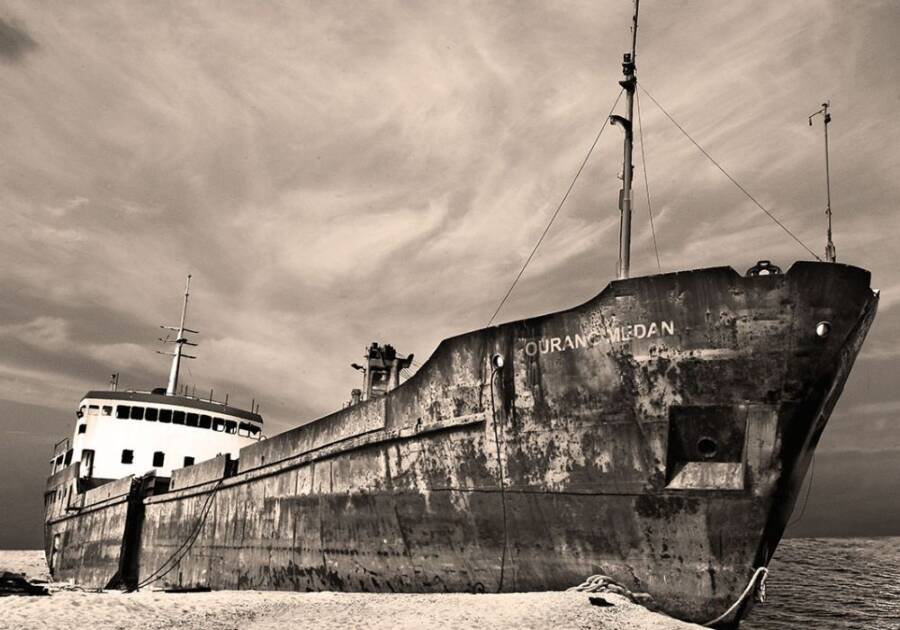
Northeast of Australia near the Solomon Islands, a distress signal was sent by the steamship Ourang Medan, asking for urgent assistance. When people responded to the signal, there was no further communication; rescue vessels were dispatched and they found the ship listing to the side, with all crew members dead on board. Whilst investigating the unfortunate situation, explosions were heard within the ship so the rescuers left in order to remain safe. The SS Ourang Medan proceeded to go up in flames, sinking into the ocean and leaving the mystery of the dead crew unsolved.
Most people believe that this is a ghost story due to the unreliable circulation of the tale; whenever it is told, details are changed including the location of the ship and the particular events leading to the crew's death. Such changes mean there can be no confirmation of possible facts, keeping the mystery confusing and unsolvable.
One speculation regarding the crew's death is that the Ourang Medan was transporting cargo - dangerous chemical substances - which were badly stowed and led to toxic gases being released into the air, poisoning the people on board. Later, the chemicals may have reacted with the salty seawater, causing the explosions and flames.
Another common theory is that a malfunction occurred in the ship's boiler system. The incomplete burning of carbon-based fuels or the faulty boiler could have led to the production of carbon monoxide; this gas is odourless and colourless, meaning the crew could not have known that something was wrong with the boiler. Continuing with their tasks as normal, the carbon monoxide would gradually replace the oxygen in their bloodstream, causing their vital organs to shut down.
Though these scientific explanations for sudden death and fires are valid, there is no confirmation that the SS Ourang Medan ever existed. Searching proved to be unsuccessful; no registration records for a ship under this name were discovered, even after looking in several different countries.
In conclusion, the legend of the Ourang Medan 'ghost ship' is likely to be completely fictitious, or an exaggerated retelling of another ship's accident.
THE FLYING DUTCHMAN
A legend originally told in the 18th century of Dutch maritime power, the Flying Dutchman is a ghost ship that could never make it to the docks, doomed to sail the seas for eternity.


The most commonly told version involves a captain known as Van der Decken hoping to navigate a rocky headland in South Africa called 'the Cape of Good Hope'. Whilst a violent storm was brewing, the captain made a vow, stating that he would continue sailing until the 'Judgement Day' if that was required to make it through.
Unfortunately, the Devil overheard his promise and decided to curse the ship and its captain, forcing them to sail the seas forever.
Whether the legend is fact or simply paranormal suspicion, people have reported sightings of the Flying Dutchman up to this day. People consider the doomed ship to be a bad omen, signalling that danger or death is on the way.
One sighting occurred on the shores of South Africa in 1939, crowds of people insisting that they saw the ship moving at great speed towards land as if it were ready to collide with it. Before long, it had disappeared.
Two years later another report followed, stating that the vessel was heading towards rocky land before vanishing without a trace.
King George V supposedly saw the ghost ship in 1880 during a 3-year voyage with his brother, Prince Albert Victor.
The logs suggested that 13 people altogether saw the Flying Dutchman, including the officer on the bridge and the quarterdeck midshipman. ''July 11th. At 4 a.m. the Flying Dutchman crossed our bows. A strange red light as of a phantom ship all aglow, in the midst of which light the masts, spars and sails of a brig 200 yards distant stood out in strong relief.''
Later that day, one of the sailors who had spotted the ship fell from the top masts and died, reinforcing the idea that the Flying Dutchman was a bad omen.

A possible explanation for sailors spotting the ghost ship is that it was a mirage, a natural event where the sun's rays bend across a reflective surface through refraction, redirecting the rays of light until an illusion is produced.
This scientific phenomenon is most likely the case when people see a 'ghost ship', the illusion causing a reflective image to seemingly float above the water's surface.
PHANTOM ISLANDS
Phantom islands are land structures that have been noted on maps by sailors, but are later discovered to have disappeared. Whether it be due to navigation errors or mistaken observations by the human eye, these islands are never able to be found again.


Many old maps depict islands of various locations and sizes that are later proven to be non-existent in modern maps.
The 'Isle of Demons' is an example of this; discovered in Newfoundland, Canada, it appeared on maps in the 16th century then was removed in the 17th century. Usually depicted as two parts of land bonded together, some people believed that it was inhabited by demonic flying creatures and haunted spirits.
'Hy-Brasil' is another vanishing island, supposedly located in the Atlantic Ocean to the west of Ireland. It was drawn regularly on maps with a river shown to run through the middle, but was taken off in 1865 due to no official discovery of the land. A belief some people have is that the island is constantly cloaked in mist, only appearing once every 7 years.
An island known as 'Antillia' was mapped in the 15th century, located to the west of Portugal and considered to be a refuge for bishops fleeing Iberia. In the 1490s it was gradually removed as explorers were unable to find it.
'Los Jardines' was discovered in the 16th century by Spanish navigators in the western Pacific Ocean. Said to be a collection of islands rich in vegetation, people were never able to find it again.
The 16th century also brought 'Bermeja', an island off the coast of Mexico; this lasted a long while on maps, shown to be near neighbouring islands by Spanish cartographers. After the 19th century, surveys were unsuccessful in finding it and it was taken off maps, many people believing that it sank into the ocean.
'Saxemberg Island' was found by a Dutch captain in the 17th century in the south Atlantic, and multiple sightings by different sailors were reported over the following years. However, the existence of this island was later disproven through expeditions.
Sighted by a ship known as 'Aurora', the 'Aurora Islands' were said to be located near South Georgia until it was seen multiple times, leading to it being kept on maps until the 19th century when it was proven to be non-existent by explorers. People believe that this was likely an iceberg seen in the right place at the right time by multiple sailors.
Reported by a whaling ship in 1876, an island known as 'Sandy Island' was mapped between Australia and New Caledonia. It remained on maps and even 'Google Earth' until Australian scientists disproved its existence in the early 2000s.
These mistakes have many possible explanations; sailing in stormy weather or thick fog means vision becomes unreliable, and sailors may have mistaken large waves or rocks as land masses. Floating icebergs that travel far across waters can be misidentified as new islands. Land may have eroded and sunk into the ocean, erasing islands that may have actually been there. Rising sea levels could have also been the cause of various disappearances, covering the land until it is deep underwater.
Regardless of the causes, cartographers have always worked with the information available to produce somewhat accurate maps. Nowadays we have the technology to scan and locate land masses properly, producing highly accurate maps with less phantom islands. However, there will always be new islands out there; some real and some not.
PRIMARY VISUAL SOURCES - AQUARIUM PHOTOS
During our second production meeting, the team discussed primary research sources. We decided that we would each take photos at various aquariums or beaches, or find photos we had taken at a previous time, and use them for visual analysis; this would relate to the ocean-themed game, helping to develop underwater scenery.
I agreed to find photos that I had taken the previous year in an aquarium in Lowestoft.


The lighting in the starfish section is a dark blue, highlighting the natural underwater environment which they tend to thrive in; since they are positioned towards the top of the tank I believe that their usual habitat could be an intertidal zone - shallow or somewhat deep rockpools of various temperatures, in which they are able to reach the surface when needed.
I think the lighting could be used as inspiration for deep sea scenery due to the dark, seemingly haunting colour surrounding the starfish.
The creatures themselves are a light, sandy colour, the contrast making the living beings easier to distinguish from the low-lit environment, despite how little they move across the tank.
Taking note of the brighter particles floating amongst the creatures, a small, moving element similar to this could provide depth to any underwater game scenery the team decides to create.


The other marine life, such as fish, are more brightly coloured than the starfish.
Though they consist of mainly grey scales that glint in the underwater lights, they are accessorised with a burst of colour often on their tails and fins.
The photos above include a fish with a vibrant tail and fins that look like they have been dipped in fresh red paint. This brightness is a great contrast with the sandy environment, providing an element to lock on to instead of just having constant grey or beige all around. The sudden intense colour is a reminder that the ocean is teeming with life, some creatures obvious to the eye and some not.
The brightness may also be a warning to predators. Particularly in the rainforest, brightly coloured creatures are considered poisonous and need to be avoided. This is often the case underwater too, but not always; considering this, I think making unique marine life for the game could be more beneficial if vibrant tones are used, giving more life to the environment and also something that the player's eyes can easily follow.
Although the eye tends to be drawn to the colour on the fish, the main scales are not to be ignored. There is plenty of detail on the body of each fish, the patterns complex and varying in size or shape. In addition, the grey scales are often not just grey; they contain other tints like soft blues, purples and whites, creating a sense of depth.


Unlike the starfish enclosure, the Zebrafish is in a tank lit with purple and pink.
The lighting moves in waves, mimicking the movement of the water and highlighting various protruding rocks and seaweed tendrils.
The colourful pattern pairs well with the stripes of the fish, providing a kaleidoscope effect which makes the creature harder to see, but the viewers then feel more rewarded if they spot it amongst the vegetation.
The picture to the right is of some Black Moore Goldfish.
Despite the normal tone of their scales, the bright, blue lighting plays off the undertones and creates a glowing appearance, highlighting the bellies and bulbous eyes of the fish. This slight glint of colour draws the eye, allowing people to notice more details the longer they look, one being the tail and fin stripes.
All pictures considered, I have realised that lighting is an important aspect in underwater environments.
Certain colours can emphasise the details of certain fish, and when paired well they work together to create something mesmerising and appealing to the human eye.
Red's Research
The House
The House is a stop motion animated TV special on Netflix featuring three stories taking place in the same house. I wanted to analyse this special as I want to use parts of the story to potentially inspire the narrative of the game. All three stories take place in different worlds, with different characters, but all in the same house.
And Heard Within, A Lie Is Spun
In the first story we follow Mabel who’s living in a modest small house in the late 19th century; they don’t have much but they are living content as a happy family. Later the father Raymond is ridiculed by wealthy relatives after visiting, this leads him to make a deal with an architect, Mr. Van Schoonbeek, who he finds after stumbling drunk in the forest. The next day, Mr. Van Schoonbeek’s agent, Mr Thomas, explains that they will build a new house for the family free of charge. As the family move in Mabel starts noticing strange events and renovations occurring within the house while the parents are oblivious and become entranced by the house itself, at some point while having dinner the parents forget to put the baby Isobel to bed as they stare into the lights of the house, leaving Mabel to do it for them. Eventually Mabel notices the house changing like the stairs being removed and a new room appearing outside her window, she also notices people within the house that are working on new renovations that stare back at her creepily when they notice her watching. It is implied that the price for this free house is being Mr. Van Schoonbeek’s entertainment as the parents try to do things they once loved but ultimately take no joy in those activities; the mother tries to sew curtains like she used to but describes is as work, and after the father tries to light the fire with it burning out, Mr. Van Schoonbeek is seen laughing in the corner. Mr. Van Schoonbeek gifts the parents some new clothes that resemble the furniture of the house, and later turn into the furniture itself. The house burns down with the parents inside as Mabel takes her baby sister and escapes the house, the end of the first story.
Then Lost Is Truth That Can't Be Won
The second story follows a developer trying to sell the same house in a different world set in the modern era. The developer is trying to flip the house to get a loan from the bank to get a speed boat. He says that he had to let go of his construction crew because all he was buying was gadgets to make the house fancier and look more expensive, while ignoring the key foundations of a house. We also hear from a radio in the background that they are in a recession, and it's implied that the developer is in denial about this fact. The developer finds a crack in the wall and finds bugs crawling into the wall, he hides the hole with plaster instead of calling an exterminator. He rushes to install all these fancy appliances he’s bought for the house and decides to call who we think is his partner to tell them about the good news. He then hears scratching from inside a kitchen cabinet, and as he opens it there is a swarm of bugs living inside, and again he rushes to kill the bugs as he rushes to read an article of how to kill them properly and goes around with a vacuum cleaner spreading boric acid powder around the house. This doesn’t work as we still see bugs in between the floor boards.
On the day of the showing, we see the off putting nature of the house because of the developer’s neglect; the white carpet showing everyone's footprints, the curtain rods breaking and the sink not working. It seems no one is interested in the house as when the developer starts doing a speech about the materials and colour changing lights in the kitchen counter everyone has left as normal people don’t care about the fancy tech but the house actually working. After the last person leaves as the lights malfunction a couple appear in front of him, the two are weirdly shaped like the bugs in the house and say that they are very interested in the house. When they appear we start seeing bugs in the background and when the developer notices, the developer starts pouring boric acid powder everywhere and he seems to be slowly going insane by inhaling it. The couple are allowed to stay in the house due to the developers desperation to sell the house and even allow them to stay the night catering to them, he calls his bank to tell them he has people interested despite the couple saying nothing about payment.
He eventually gets frustrated with these two people, and calls his partner who doesn’t seem to care. We then see the extent of his insanity when he stares up into the ceiling and sees bugs putting on a dancing performance. He finally calls the cops about the couple squatting, but when he opens the door the police are actually there because of a complaint from his dentist who he has been treating like a partner. When the police leave without checking for the squatters, the couple invite over their entire family, and enraged the developer tries to pour the boric acid powder on the squatters. However, he accidentally pops the powder in his face leading him to be taken to the hospital. He is greeted by the two squatters that take him home, and with him being in a catatonic state and bread dead, we see the house being ravaged by the large representations of the bugs as well as the developer digging a hole from the rotisserie oven.
Listen Again And Seek The Sun
The third story takes place in a world flooded with water, Rosa the landlady of the house is seen with a restoration plan of the house and spends her time trying to put up wallpaper that ultimately keeps falling down. This is due to the water being brown, and we see two tenants of the house complaining about the water later, however Rosa focuses on the wallpaper. She goes around the apartment and we see Elias, who offers to pay the rent in fish instead of money, which Rosa gets angry. The next tenant Jen is more connected to her spiritual side and pays Rosa in crystals. We are made to believe these tenants are bad but as we reflect on the current state of the world, these seem more useful as the world is flooded and crystals and fish would help better as resources rather than rent money.
Jen’s partner Cosmos arrives on the island, Rosa hires him to fix the house as he is a craftsman. However, he ends up dismantling the house’s floor boards to make Elias a boat, which makes Rosa angry. Elias then tells Rosa that it’s pointless to stay at the house as the flood will take over eventually. Rosa finds that the house’s water has been fixed by Cosmos, and finally puts up the wallpaper while Elias leaves the house on the boat, she finds a fish and drawing Elias left in his room as a present to Rosa for giving him his first real home. Jen then offers a final meal before she and Cosmos leave, and questions what Rosa wants to do with her life.
Jen then puts Rosa in this spiritually induced vision as she sees the house falling apart and what could have been of her being with Elias and Jen and being happy, before losing it all. Rosa wakes up and sees Jen and Cosmos leave, she turns to the house and begs it to let her go as she realises she should have prioritised her relationships over the restoration plan she was continuously obsessing over. The house was beginning to flood, and with nowhere to go Rosa felt hopeless, however Cosmos gave her one last chance and gave her the option to push this giant metal lever when she was ready to move on, which turned the house into a boat. We see Rosa catching up to Cosmos, Jen and Elias sailing off into a brighter future.
Narrative Analysis
It seems that the house is supposed to be a cautionary tale about what could happen when we are blinded by materialism and trying to gain more while ignoring the foundations to get there or problems that should be solved first. Cosmos summarises the moral of the film “You must begin with the roots,” with the father Raymond, he should have been focusing on his family which is what gave him happiness, and with the developer he should have focused on the foundations of the house instead of rushing for the money. Rosa is the only one that broke free from this obsession with the house, as she realises the relationships she has with her tenants is more important.
Colour coded symbolism is also something I noticed with this movie, as in each story green is a prevalent colour within the house. Green represents wealth, but is also considered sickly in some contexts; we see green the most in the first story as the houses furniture, decorations, and the gifted garments given the the parents are all green, with green being the colour of the boric acid powder container in the second, and green being the colour of the wallpaper in the third story. So we can also defer that green is also the colour of obsession.
Across the stories there is also an outside influence that affects the characters decisions, in the first stories Schoonbeek, Raymond’s relatives and the bugs are a negative influence as they cause the character to make rash decisions. The flood is also a negative outside influence, however it is Cosmos that is the major difference as he confronts the overall problem of all the stories head on, and teaches Rosa to break free of this materialism curse the house has cast upon its residence. This makes Cosmos and the other tenants a good influence on Rosa as it reinforces the importance of relationships.
How we could use this as inspiration
An aspect of the movie I quite like is the three story layout, how each title summarises the moral of each and can be put together to make a poem of sorts. I’ve talked about narrative structure before, and in my Environment Design project I talked about having sections based on song structure; I could do the same here based on topics related to my story. I can start off with a rule of three like the movie, and start conceptualising some plot ideas based on three major turning points.
I also quite like the theme of a flooded world from the third story, as well as the stakes
raising as the flood threatens to take the house. As we want a mainly water themed game but also want to consider other themes that might not include water, I could take being stuck on some kind of island being the main theme as we can include both land and sea elements. The flooding taking over the house also sticks with me as I am a very sentimental person and I could see a flood as an overall threat. I also like the materialism theme but I think I should change that element to make the story more unique, so maybe I could add the common trope of the main character being afraid of change or being afraid to leave but for a different reason rather than materialism.
Slime Rancher Visual Research
For some visual inspiration, I chose to research Slime Rancher as another person in my group was looking into the game for context and multiple people were interested due to the recent updates on Slime Rancher 2. Visually both Slime Rancher games carry an overall colourful cartoonish style with the second game taking on a more pastel and brighter theme than the last. Slime Rancher overall has a soft look to both games as the game uses gradients and rounder shapes to come across as more fun and friendly. I will be looking at shape, colour and light language as I feel those are the most prominent features in the game’s artstyle.
Shape
An essential part to Slime Rancher’s cute and fun artstyle is the shape language; almost everything in the game has a rounded edge which compliments the soft gradients and colourful palette. More specifically, the game breaks down almost everything in simple shapes as silhouettes of structures, objects and characters are easy to read. Though the game mostly uses rounder edges, there is still a lot of shape variety and the game doesn’t entirely remove sharp forms. Briefly touching on textures; the game heavily uses textures in its shape language to further accentuate details, for example big mountain like rock formations have this smooth blend of colour lines that wrap around the terrain, creating depth in the rock but also accentuating the terrains smooth shape. Something I noticed was the Tarr, the only real enemy in the game, being the same shape as a normal largo slime. This is interesting as despite being the same shape Tarr is still portrayed as a negative force due to its jagged sharp teeth, however beyond that its silhouette is indistinguishable from a normal largo in game. To help define Tarr as a threat they extend these creeping tentacle-like appendages which reach towards slimes, this makes their silhouette more unique as well as intimidate the player when they first see a Tarr. Tarr being a similar shape might be a technique to make their appearance more of a surprise to new players who aren’t suspecting of an enemy.
Colour
Tarr are also established as an enemy in game due to its colour palette which resembles an oil spill, and with the lack of pure black in the game it makes these enemies stand out. The game’s colours itself are colourful, but chosen carefully so the game looks appealing instead of being too overwhelming. To harmonise colours they have created a fog like effect that overlays far away objects and terrain, creating environmental ambience to help with perspective but also to simplify the colour palettes. The slimes and interactables are designed to be the most vibrant to stand out against the environment, different sections of the game feature different colour palettes with the slime’s colours made to contrast. For example in the first game, the jungle section which is primarily green contains slimes that are warmer colours to stand out against the cooler greens.
Light
Light is one of the most important parts of the game as it contributes to Slime Rancher’s soft glittery look. There’s a varying amount of reflective light that gives the game this jelly look, mainly the slimes have a glossy effect which cements them as made out of slime. The game also takes advantage of warm light, where it makes the area around a shine redder in colour which also appears in real life; this makes the game more vibrant and life-like as shadows appear more cooler in contrast.This is implemented more in Slime Rancher 2, as I feel as the first game is missing that soft lighting and looks flat compared to the second game.
How we could use this as inspiration
At this point we are still deciding the genre and overall theming in the game, but have settled on an ocean theme for now. As the ocean is more commonly associated with Thalassophobia and being stranded, we are thinking of horror and RPG themes. Since most of the team would like to design sea creatures, I have the idea of making cute characters and scary enemies as a contrast in the game. We could use colour and light contrast to differentiate the two and make the friendly creatures more vibrant with enemies being darker, I could make deep sea creatures enemies as the deeper you go in the ocean the colours change to blue due to the colours filtering in the water plus lack of light. We could also use shape language for our game which could help define the game’s artstyle.


Biology of animals
I have chosen to research sea animals as I already have an interest in them as well as our game having a sea theme where we agreed to add our own sea creatures. I chose to research the biology of some types of jellyfish, as another person in the group is researching bioluminescence; we can potentially combine these two topics to create some interesting concepts in the future.
As we are thinking of making a variety of sea creatures, we can sort these creatures by section of the game. This is as sea animals change biologically based on the environment, for example deep sea creatures are made to withstand more pressure, some sea animals are made to withstand fresh water or salt water. Since it’s easier to sort marine biology based on how deep they are found within the ocean I would like to summarise some traits found commonly in deep sea creatures.
Pressure
Pressure, or more scientifically specific hydrostatic pressure, is the most important environmental factor that affects the biology of aquatic life deeper in the ocean. The pressure from water that is deeper in the ocean would crush fish living near to the surface, therefore special membranes, proteins and other important biomolecules are distorted to withstand the high pressure. Some aquatic life may also develop “piezolytes” which are molecules that stop high pressure from distorting larger biomolecules. Due to all these changes in deep sea creatures biology these organisms are less likely to survive in shallower waters.
Temperature
Temperature is another environmental factor as the deeper into the ocean, the less sunlight can reach. Hydrothermal vents, despite releasing hot water into the cold, aren’t enough to keep the temperature up, therefore deep sea marine life has adapted to have flexible proteins and saturated membranes that don’t freeze in the cold, however fall apart when in a higher temperature.
Gracie
I have chosen to look at Pokémon designs, specifically their water types, to help inspire ideas for the future creature designs as Pokémon has a lot of unique designs which some of them take real world inspiration from actual aquatic creatures. I aim to look at their designs with their shapes and colours compared to each other, as well as talk about some of their behaviour.
HORSEA LINE
Horsea and its evolution line is most likely inspired by the spiny seahorse with its sharper silhouette. It uses it's long snort to attack enemies by shooting water or black ink out of it and can create whirlpools from its dance-like motions in swimming.
When evolved into Seadra, it develops poisonous venom that can induce numbness or cause humans to faint, when looking after its young it becomes thicker and stronger. It traps its prey by making whirlpool and once they're tired it swallows them whole.
Kingdra spends most of its time in unhabituated areas, normally at the bottom of the sea, of the ocean hibernating to refill its power. When there is a storm, it awakes to hunt for prey. This awakening is said to cause tornadoes. Its yawn itself is powerful enough to cause undercurrents to destroy small ships.
SKRELP LINE
The Skrelp line is more based on the common seadragon. It's appearance looks like seaweed, which it uses to hide itself from its predators and to stalk its prey. It also uses seaweed to travel through the ocean to make up for its poor swimming abilities.
Its evolution Dragalage has adapted to be more deadly compared to its pitiful pre-evolution, it's poison has strengthen to be able to melt the hulls of metal tankers and trapping its prey by spraying it with poisonous liquid
In its design, I see it as an opposite to the Horsea line. The Horsea line stays rather short and has a lighter colour palette of blue and yellow and white While its shape is more sharp, it's silhouette isn't that complicated. Skrelps evolution becomes long, spiderly and more complicated in silhouette, even more reminiscent of seaweed and instead its colours are more muddy and dark with brown, purple and a bit of red. These design differences can also be explained by Horsea coming from Generation 1 where the designs were more simple and more connected to what they were based off, its final evolution coming in the next generation and the Skrelp line debuts in the Generation 6 game that came out in 2013 after 500 more Pokémon designs were made.
ARCTOVISH AND DRACOVISH
Both Arctovish and Dracovish are fossil Pokémon that were made when fusing two different fossils together. They share the same head but different bottom which gives them different abilities. Despite the same head, they're both angled differently. The formers mouth is angled upward which gives it issues with eating and might have been the cause of its extinction. The bottom half of Arctovish was presumably based on a real life extinct marine reptile, most likely a plesiosaurus, it floats as if swimming. It's main colour is blue.
Dracovish has legs instead, its bottom half seemingly based off a stegosaurs, and while the head is tilted normally, it's attached to the tail making it look unusual. It was said to be the apex predator with its powerful jaw and legs that can run 40mph. However, as a trade-off it couldn't breathe unless it was underwater. It keeps some blue but also adds red and green as add ons.
BASCULEGON
Basculegon might be based on multiple fish. One of them being a species of salmon native to Japan called Sakhalin taimen (otherwise known as the phantom fish). Salmon who stay in fresh water start to deteriorate the longer they stay there and usually die after spawning. There are some cases where they're still alive but their bodies have already started rotting, dubbed as zombie fish. The concept of a Ghost type fish could be based off this concept.
This theory is supported when reading both its pre evolution and its current pokedex entries. White Striped Basculin are also known to travel upstream, a journey most of them don't survive. The ones who don't can possess and fuse themselves on the ones who do on their lower body and that's how they can evolve.
The male one turns red and its edges are sharper to represent the souls rage while the female is light blue and more round to show their sorrow. The souls within them are said to have their own will, its how they help the Basculegon navigate the water even through turbulent rapids easily and give it the energy to continue travelling on even when it's tired. The males can jump incredibly high while the females can conjure up terrifying illusions. This can also be seen in its face as well, as the females look more softer as to show their grief while the males lines are sharper and harsher,
FRILLISH LINE
Frillish and Jellicent are based off jellyfish, most likely on the stygiomedusa (giant phantom jelly), a creature that's only been spotted 118 times over 110 years. Their dual water/ghost type is pretty visible via their designs, with their flowing silhouette given by their tentacles, their pastel colour palette and the crown like tuft on their head, which doubles as a way to attack their opponent by shooting out water, adds to the more royal feel of them compared to some other Pokémon. These ones also have different appearances based on their gender. It's said the more they suck in souls the bigger a Jellicent's crown gets.
CORSOLA (AND IT'S GALARIAN FORM)
Corsola is a simple designed Pokemon, as it's just coral with a face. In particular, it's based on stony coral which might have inspired it's rock typing. In universe wise, they reside is warmer shallow waters. When living in healthy waters it can continually regenerate its skin and branches but in dirty places it causes degeneration and it's growths become discoloured.
Galarian Corsola is in universe the result of climate change with the different sea temperate which caused it to die out and gave it the Ghost typing, the design reason might be because of the high mortality rate of its real world counterpart bleached coral. Their incorporeal branches can extract and ae used to drain the life force of its prey. Eventually its diet causes its shell to break and its body becomes completely incorporeal without anything to hold it and it evolves into Cursola. The new form is very lightweight so it wobbles not used to its body weight.
EELEKTROSS
Eelektross and its pre evolutions are based on a few different creatures. Their main ones seem to be eels, specifically the electric eel but its colour scheme has more in common with the ribbon eel. It's mouth however might be based on a leech or a lamprey, which it uses it to catch its prey and shocking it with its fangs before dragging it back into the ocean. Eelektross usually floats in battle but can use its lower fins to walk on land. The bottom of its fins feel reminiscent of batteries, fitting into the electrical theme while it's pre-evolution Tyanmo has similarities in appearance to a lightbulb.
NIHILEGO
Nihilego isn't a normal Pokémon but rather an Ultra Beast, a Pokémon that comes from another plane. This one originates from a place called the Ultra Deep Sea. Nihilego is another creature that is reminiscent of a jellyfish, however compared to the Frillish line its body is made of glass and the shape can be vaguely more humanoid with its tentacles and changing shape. If you look closely in its art, its tentacles together looks like hair.
Nihilego's main feature is that it can latch onto someone and stimulate their own abilities and thoughts to an extreme extent.
TOXAPEX
Toxapex's legs are attached to its head, thus its body is suspended in the air. Both the outside and inside of its leg are covered in spikes which makes it a defensive shell. Its legs can also shape a protective dome around its body and also trap itself in heat when living in colder waters. It can fire its spines that can cause pain for 3 whole days and aftereffects cans till stay after that. If it can't get its spikes through it attacks with its claws. Toxapex is most likely based off a crown-of-thorns starfish with its spikes all over it's body and multiple legs





REAL LIFE OCEAN CREATURE FACTS
Some jellyfish, specifically the Turritopsis nutricula, are able to revert to a younger life stage, effectively making them biologically immortal, when jellyfish stay on the surface for longer than a few hours it can evaporate due to its body being 98% water. Box jellyfish can carry enough venom in their body to kill 60 humans. The biggest jellyfish in the world is the phantom jelly, which has only been seen about 120 times since it was first discovered.


Stoplight Loosejaw - Found in the Twilight Zone worldwide - Discovered in 1848
They're small dragonfish. It's most distinctive feature is its ability to unhinge its jaw unusually wide, thanks to its lower mandible. It's also one of the few fishes to be able to produce red bioluminescence a colour fish can't usually see. This makes it a deadly hunter, being able to sneak up on its prey in the dark.
Sea Angels - Found in the North Atlantic - Discovered 130 million years ago
They're ancient gastropods, a sea slug that has evolved its 'feet' into wings, that have been found in fossils dating back 400 million years ago. Sea angels ensnare their prey by extending their tentacles tow rap around sea butterflies before eating them, using their sharp tongue to help. They are also toxic when eaten which means their only predators are filter feeders.

Cymothoa exigua is a unique parasite where it's the only known parasite to replace a body part. It enters the future host via its gills and using its spiny legs attaches itself to its tongue, then using its claws to suck the blood out of it until the muscle withers away. Only then is it able to grasp with its claws what's remaining and fuses with it, replacing it. While the process itself is painful for the fish, afterwards it lives normally without any issues.

Coelacanth's (often called living fossils) are an ancient lobe-finned fish prehistoric dating back 420 million years, they were thought to be extinct until they were rediscovered in the 20th century. Their dark blue-grey scales with the speckled lighter spots makes them stand out compared to the others. They're nocturnal and prefer to live in deep sea caves and volcanic slopes.

Deep Sea Anglerfish - Found in - Discovered in 1833
Female anglerfish are large, deep sea ones in particular have flattened torsos and their mouths are turned up due to them living in deeper levels. The males are tiny and don't produce a lure compared to the females. They latch onto the side of the females with their teeth and can even fuse with them, losing the ability to see and relying on the female for nutrition via her blood.

A lot of sharks have very good eyesight because of a tissue called tapetum which helps them guide through darker areas, they're also capable of seeing colour. They can only capable of swimming forward and use electroreception, the ability to detect weak electrostatic fields, to notice prey and navigate the ocean. Despite their reputation in media as blood thirsty killers, most sharks don't like the taste of humans.

Keira
Still Wakes The Deep is a psychological and Lovecraftian horror game created by The Chinese Room, a British game developer.
Set in 1975 on December 26th, you play as Cameron 'Caz' McLeary, a Scottish electrician assigned to work on the Beira D oil rig in the middle of the stormy, hostile Northern Sea. The game starts as Caz awakens in his cabin and goes to get food in the cafeteria, upon arriving he is called to the foreman, Rennick's office on the far side of the rig, greeting co-workers along the way. It appears that part of the reason that Caz took the job on the rig was to escape an assault charge after a fight on the mainland, but the police had contacted Rennick, informing him of the incident. A call from the drill team interrupts their conversation, resulting in Rennick telling them to continue drilling despite any concerns. He then tells Caz that he is to be sent back to shore via the helicopter. Before he can be sent away, however, a alarming crash sounds out rattling the rig and throwing Caz and a few others into the ocean.
Caz drifts in and out of consciousness, having a flashback of Roy, the rig's chef, explaining to Caz's wife, Suze, the duo's decision to take on the job on the Beira D as a way of evading the police. As he drifts, Caz is being tended to by Douglas and Brodie. Passing the lifeboats, agonising screams erupt from the dive bell. Caz finally awakens in the first aid room and heads outside. He meets with Brodie, who is trying to raise the dive bell that Raff is trapped in, informing Caz that they were not able to save Gregor. Caz is then sent to engineering, told to travel under the rig, where the player sees the first evidence of the Shape, surrounded by a bright blue light, a blood vessel-like creature that starts to transform workers on the rig into grotesque, agonizing monsters.
Evading his newly transformed co-workers and finding his way in through engineering, Caz makes his way to the kitchen, finding Roy who had taken refuge there, boarding himself in. After promising to help Roy, Caz leaves to secure any lifeboats, but he loses them due to the Beira D's poor construction.
Rennick orders an evacuation by helicopter, and tries to leave without waiting for the others to arrive, but the helicopter is turned and crashes into the rig shortly after take-off. Tendrils begin to further damage the oil rig, resulting in Caz needing to help Brodie and Finlay with preventing it from capsizing or keeling over. As they do so, the trio have to avoid the Shape and their monstrous co-workers. As the monster gets closer, Caz begins to hallucinate, causing him to see and hear memories with his family.
When a flare tower fails, Caz has to prevent a gas explosion, and attempts to rescue Roy, but by the time Caz finally arrives, Roy is dying from diabetic ketoacidosis. From then onwards, things somehow get even worse. Brodie sacrifices himself to float the rig, resulting in a despondent Finlay snapping and attempting to blow up the Beira D using a lighter that Caz had given her before the chaos had started. Before she has the chance to do so, she is crushed by a piece of falling machinery. Prior to succumbing to her injury, Finlay convinces Caz to explode the rig instead and prevent the infection from reaching the mainland. Caz agrees to do so, reliving memories of meeting his wife and the birth of their children in his final moments.
In Scotland, Suze, who had hinted at wanting a divorce, writes a letter to Caz, hoping to persevere with their marriage, wishing him and Roy home soon.


Siren's Rest is the DLC to Still Wakes the Deep, set around ten years later, in 1986, now following Mhairi Brodie, the daughter of Albert Brodie. Now the leader of a diving team, she dives into the grave of the Beira D, determined to uncover the fate of the crew and discover what actually went wrong after losing communications and the rig sinking without any sign.
With the support of her colleague, Rob, and her supervisor, Hans, Mhairi explores what remains of the Beira D in the watery depths of the North Sea. She uncovers and photographs bodies, logs from the rig's crew, personal items and the general story of what could have happened as well as closure for the families affected by the incident.
Paying close attention to what surrounds the bodies of the crew, it appears that coral reeves have formed around the crew, but something is off. Rather than coral, we are actually looking at the calcified remains of what once was the blood-vessel-like tendrils that had choked and transformed the crew.
Mhairi surfaces into an air pockets, making her way through areas such as the observation deck, having to jump across platforms in the, now destroyed, rig. She even has to detach herself from her umbilical as it catches and obstructs pathways in the collapsed Beira D.
The reason that Siren's Rest works so well as an added piece to the already formed story of 'Still Wakes The Deep' is that we see the consequences and affects of the past. As the player we have an extra chunk of knowledge that Mhairi does not have; we know of the Shape, the tendrils, the mutations. All Mhairi knows is that her father was on this rig and that a tragic explosion destroyed the structure and its crew. We tour the familiar grave site through a set of different eyes, in a different state. It changes how you move (the added resistance of being underwater), the reasons for your sense of urgency (trying not to drown as opposed to joining mutated co-workers). You don't know what remains, the game sticking to the fear of the unknown that plays into Lovecraftian horror.


The two separate sections of the game work in tandem in order to use the twist of time to create its own sense of horror, gloom and decay.
Bioshock is a first person shooter that is set in a dystopian underwater city named Rapture. In 1960, Jack, a lone plane survivor, spots a lighthouse and swims from the wreckage left behind. He boards a Bathysphere that takes him deep within the ocean; to Rapture. Assisted via radio by a man named Atlas, Jack makes his way to safety. However Andrew Ryan believes Jack to be a government agent and uses Rapture's automated systems and pheromone-controlled splicers against him.
Initially, Rapture was conceived and presented as a utopia. A place where people would be entitled to all that they made without 'parasites' causing any interference as introduced by the billionaire mogul Andrew Ryan. Since then, Rapture had decayed, experiencing the aftermath and effects of civil war and anarchy that was brought about by the ideal of the citizens.
With the help of a sympathetic smuggler and a rogue geneticist, Jack transforms himself into a superhuman using salvaged gene altering chemicals. Using his new abilities, Jack fends off against psychotic mutants, security robots and armoured supersoldiers created in the unrest of Rapture; all the while he is told by Atlas that the only way to survive was to lethally harvesting the genetic material or 'ADAM' from Rapture's only citizens with a chance: the ten year old 'Little Sisters'. Upon overhearing Atlas's words, Dr Tennenbaum intercepts Jack, encouraging him to try and save the sisters instead, giving him a special plasmid that should only kill the slugs embedded whilst leaving the girls alive and restoring their humanity, although the rewarded ADAM is significantly less, Tennenbaum promises to repay Jack should he do as she asks.
As he attempts to travel through the city, Jack uncovers the history and fate of Rapture via audio logs, genetically induced playbacks of the past and radio messages. Atlas claims to Jack that his wife and child have been hiding on a submarine, upon reaching where it is located, Ryan has it destroyed. Atlas tells Jack that Ryan must die.
Jack makes his way to Ryan who, with no resistance offered, reveals why Jack has really come to Rapture. Jack was born in Rapture two years prior to Ryan and an exotic dancer named Jasmine Jolene (he was illegitimate) and was genetically modified to mature rapidly. It is further revealed that after purchasing Jack's embryo, Frank Fontaine designed him so that he would obey any orders that start off with the phrase 'Would you kindly'. Jack was sent to the surface when the war started to put him beyond Ryan's reach. As the conflict between Atlas and Ryan reached a stalemate, Jack was ordered to board a flight with a package which he opened at a designated time. Inside there was a gun and a set of instructions to hijack the plane nearby the lighthouse, causing him to return to Rapture. Ryan proceeds to demonstrate Jack's lack of free will using the aforementioned trigger phrase as to which Jack realises that Atlas has been using since his arrival. Ryan orders Jack to kill him so as to die on his own terms, leaving Atlas in complete control of the city.
Atlas reveals himself to be Frank Fontaine. He had faked his own death and taken on the alias of Atlas in the hopes of throwing Ryan off of his trail. With Ryan now dead, Fontaine no longer needs Jack, leaving him at the mercy of the reactivated security system. Dr. Tennenbaum and her Little Sisters help Jack to escape through the vents where he then falls and loses consciousness.
By the time Jack awakens, Dr. Tennenbaum has already deactivated some of Jack's built in responses and assists him as he breaks the rest of them, including one that would have eventually killed him. In their attempts to find Fontaine, Tennenbaum predicts that in order to get through the last few obstacles, Jack would have to assemble a Big Daddy diving suit and follow the Little Sisters through passageways that only they can open.
When Jack reaches him, Fontaine has injected himself with a large amount of ADAM, turning him into an inhuman monster. Jack and Fontaine battle and Jack prevails, allowing the Little Sisters to subdue Fontaine, swarming him and stabbing him with their needles, killing him and draining him of the ADAM in his system.
Three endings are possible in the game: the first is achieved by rescuing all of the Little Sisters. The Little Sisters return to the surface with Jack, living under his care, they are shown living full lives (including graduating college and getting married). It finishes with Jack on his deathbed surrounded by the Little Sisters.
If the player harvested (and killed) two, but not all of the Little Sisters, the game ends with Jack turning on the Little Sisters after defeating Fontaine and presumably killing them and taking their ADAM. Tennenbaum narrates what occurred and condemns Jack's actions. Later a ballistic missile submarine carrying a nuclear missile comes across the wreckage from the plane and is surrounded by bathyspheres containing Splicers, which kill all on the submarine and take control of it.
If the player harvests and kills all of the Little Sisters, the same sequence as the second ending occurs, but Tennenbaum's tone is angrier.


Similar to Still Wakes The Deep, Bioshock shows us how a regular everyday environment can rot and decay with environment and time. Once Rapture used to thrive, but as people grew greedier, the city fell apart.
Underwater Civilisation and Decay
Both of the games I looked into explore the themes of manmade objects underwater and the decay that follows in different senses. Still Wakes The Deep portrays how water can help to create a sense of danger, it's DLC, Siren's Rest, shows us the way water can break down a physical structure over time. Bioshock presents us with the concept of an underwater society destroying itself with dystopian themes of capitalism and greed.
Bioshock leans into the dieselpunk aesthetics, a retrofuturistic sci-fi subgenre that steals the technology and looks of the interbellum or interwar period up to the 1950s and fuses it with an alternate history. dieselpunk is mostly characterised by a focus on diesel machinery, industrial settings and an influence from art deco (an aesthetic that thrived during the 1920s to early 30s).
Dieselpunk combines the theming of war, espionage, totalitarianism and resistance with the technological advancements of the time period leaning towards the mid-twentieth century. It approaches the cultural impacts through a gritty and pessimistic viewpoint that forces the viewer to reflect on the impact of leadership, industrialism and revolution throughout history.
In a similar manner to Bioshock, Still Wakes The Deep uses industrialism to push an uncanny sense of unease upon the player. The game combines this mechanical terror with 70s naturalism and Lovecraftian horror.
Lovecraftian horror is a subgenre that explores the insignificance of humanity, the fear of the unknown and the knowledge of something incomprehensible; something that will drive a person crazy. The subgenre is heavily influenced by the author H.P. Lovecraft, the author of Cthulu Mythos (a collection of stories exploring Cthulu, a cosmic entity known as a 'Great Old One' amongst the pantheon of deities originating from space. The Great Old Ones had once ruled the Earth but had fallen into a death-like sleep). This contrasts with the 70s naturalism aesthetic.
70s naturalism was a trend across media and fashion that placed an emphasis on realism, authenticity and Earth. It acted as a cultural shift towards nature and a rejection of the mainstream media focusing on natural body types, unstyled hair, a natural and earthy colour scheme natural fabrics and handcrafted items. Films started to use natural light as opposed to studio lighting and generally aimed for a less polished and aesthetic look.
Mermaids
The design work that I have done mostly revolves around mermaids. I found some old notes from a few years ago about mermaid types and mythology. The images shown show the shortened version of the notes, typed out are the few pages that follow which appear to be rewritten versions with a little bit more information.
My general notes on merfolk state that they are aquatic beings with a human upper half and a fishtail, but mermen are less commonly depicted. Western mermaids are shown as beautifully seductive singers that seemingly originate from sirens. They appear in operas, paintings, books, comics, animation and live action movies, however in mythology they are associated with floods, storms, shipwrecks and drownings. Throughout history there have been alleged mermaid sightings, which are now thought to just be manatee sightings instead.
Mermaids in Greek Mythology:
Nereids are beautiful sea nymphs who protect sailors. They are the fifty daughters of the god Nereus and the Oceanid Doris, but are often associated with Poseidon.
Naiads are freshwater nymphs (meaning that they can be found in rivers, springs, lakes, etc.) They are beautiful, long-lived and benevolent or dangerous. They are known as protectors of girls and nurses of the young and many were the wives of kings.
Sirens are dangerous sea creatures (originally with a bird-like appearance) that lure sailors to their demise with enchanting songs. They lived on rocky islands in the western Mediterranean
Mermaids in Celtic and Norse Mythology:
Selkies are shapeshifters who live as seals in the sea. They can shed their skin to become human on land. One of the common legends involves a man stealing a female selkie's skin and forcing her to become his wife, should she find her skin, she can return to the sea.
Mermaids in Slavic Mythology:
Rusalka are water spirits who are often vengeful and tied to drowned women. The most famous depiction is in the opera by Antonín Dvořák.
Mermaids in Japanese Mythology:
Ningyo are fish-like creatures who often have beautiful voices. They are sometimes associated with bringing good fortune or misfortune.
Mermaids in African Mythology:
Mami Wata is a water spirit who represent wealth, beauty and danger. She is commonly depicted as a mermaid or snake charmer. She offers blessings, but also punishment if disrespect.
Mermaids in Irish Mythology:
Merrow are merfolk who wear magic caps that can make them able to walk on land. They are often recognised for duality including beautifully enchanting females and grotesque males. One popular tale includes a merrow who marries a man who stole her cap in hopes of getting it back (similar to the selkie).
Appearance and Ability:
Merfolk is the general term for human-like aquatic beings.
Cecaelia are creatures that have the upper body of a human and the lower half of a squid or an octopus.
Two-tailed mermaids appear in a few traditions as certain sirens and godesses.
Shapeshifters are merfolk who can transform themselves into other sea creatures or humans.
Amabie appear in Japanese culture as mermaid-like creatures with three tails. They are known for predicting plagues.


What Is Our Vertical Slice?
Emmy
After communicating our ideas through team production meetings and brain storming on milanote, we came up with a underwater themed game called (Amalgamation). it is a tell tale adventure game where you play as a marine scientist discovering unknown sea creatures and adventure within the depths of the ocean in your submarine. You choose your own narrative and make your own choices on how you want your story to go.
AUDIENCE ANALYSIS:
Primary audience: Our target primary audience are players from the age ranges of 14-20 years old who enjoy both the Nintendo franchise and tell-tale adventure games that rely on your own making decisions and choosing your own narrative. They also enjoy games that involve exploration of the world and aquatic themes, as well as valuing unique world building, visually interesting characters and creatures, and experimentation with choices that lead to different endings. Their current behaviors involve the players' emotional engagement and ethical decision making within games, with less focus on mechanics that involve combat or overly complex puzzles, and instead they desire games that revolve around their own agency autonomy on shaping their own narratives and endings, as they like to reflect their own personal experiences into the decisions they make, making the player feel connected towards the game and making them feel seen and engaged.
This specific audience also likes to be experimental with their game play and would often re-play the game, as they like to see and interact with all endings that the game has to offer them. They also enjoy the role-playing aspect of tell-tale games, as they may seek a form of escapism and be someone else and somewhere else, as well as wanting to be an alternative version of themselves within games to gain more unique experiences, making them fall under the immersion player profile for the fantastical aspect of gaming.
Other player profiles that have been reached are the mastery, achievement and action profiles. Amalgamation encourages it's players to think wisely on the decisions that are laid out for them, with that can come a lot of excitement as the pacing can all of a sudden change or stay the same, giving a sense of ambiguity and preparing for the unpredictable. This is supported with action-packed scenes and destruction within its game play. The main character you play as also gets powerful over time, as you upgrade your equipment and facilities, as well as being able to complete missions/tasks to obtain rewards and perks in your submarine, and creature creations in the marine science aspects of the game. This appeals to the achievers as they want to be rewarded for their efforts, and they crave more within their experience.
Secondary audiences: The secondary audience of our game would be parents/guardians who might stumble upon the hard-cover copies of the game in stores, as potential gifts that would be handed towards the primary audience. Another demographic of people would be fans of current games such as Subnautica, Dispatch, and Slime Rancher, due to similar game mechanics and the ability to make your own choices and decisions, that allows you to choose your own narratives, creating your own hybrids of creatures and exploring the games world. This type of audience would also appreciate unique game visuals and seek more stylised games with out of the box characters, creatures and worlds.
Their player profiles falls under the creative profile, as these kind of players seek customization and the ability to express themselves within game-play. It also allows them to tinker with their discovered materials, therefore encouraging exploration and experimentation within their experience,
Niche audience: Our niche target audience are people who have a key interest in ocean mysteries and documentaries on ancient aquatic history. This kind of audience seeks knowledge within science and biology and they appreciate being curious and being aware of their environment/planet, as well as the exploration of the sea world. Another target demographic would be people who are passionate about saving and stopping climate change, and want to spread awareness about our over-consumption of plastics and unethical behavior/practices on animals and current ecosystems. Our game explores these topics and the consequences if we continue our ways in fictional scenarios that could relate to the current state of our worlds.
Whats really interesting about my analysis is that we have managed to hit almost all the current player profiles for our game, meaning that our audience is very broad and open at this moment in time. The reason that we were not able to hit social is due to the fact that the game doesn't allow multiplayer, so other players cannot socialise, but they can build communities online on social media, as fandom culture is very prominent and many people like to express their thoughts and opinions on almost every media the world has to offer.
Game Design and Mechanics:
Amalgamation’s initial game structure is Hub and Spoke, the central hub is the submarine, as it is the player spends most of their time in, and it's a central point of the game where the players' decisions are branched out into many pathways, which encourages replayability. It is also much more manageable for the player as they are in absolute control of their game-play and its narrative. Our hub and spoke tries to avoid too many menu and forced tutorials, which can often make the player feel bored, and not engaged. Instead, our game enforces it as part of the world's story, through NPC dialogues and low stakes in the beginning of the game, so that the player will feel at ease and not intimidated when they first start.
The overall pacing starts really calm at the start of the game, as we want our players to learn the mechanics early on, gradually adding tension as the player goes deeper into the ocean. To support this tension, we ensure that visual cues are implemented into the environment of the game. At the surface there is a much more vibrant and harmonious colour palette to indicate that there are no threats to harm the player and it is a safe place for the player, as the weenie of the game sits there, further hinting to the player that it's a safe point for them. As you explore into the deeper depths of the ocean, there is less light around the environment, and the colour palette of the world becomes less saturated and shifts into darker hues. This is so we make our players feel uneasy and slightly scared of the unknown, as there might be creatures who are hostile and would potentially want to harm the player.
In order for the player to progress and explore the world further, they must first achieve all the research tasks from the lab, and discover all sorts of life in that specific region of the ocean as our gating system. Since our game falls under the exploration genre, we want to make sure that the player doesn't feel bored and engaged. The hostility of the sea creatures increases as you go further down the depths of the ocean, so that they feel challenged and curious of what lurks below. This also progresses the story of the game, as your team discovers a large and dangerous entity which you have all created from your experiments in the lab, making the player discover secrets as they further explore.
Main Story
Draft by Red
Context
You are on a research island with a team of marine biologists and scientists researching this new material found in the surrounding ocean. This material when broken down and absorbed by fish, allows two different species to merge with the anatomy changing to create a stable organism. You are requested by [BIG COMPANY] to harvest this material by going down in the sea with your colleagues and find out more about the material and surrounding sea life. These merged fish are called [SPECIAL FISH NAME] and part of experimentation is making these merged fish manually, however this causes some of your man-made fish to be unstable which you dispose of.
Words in [] are there as a temporary term for actual names we decide later.
Main Plot
You and your team have been on the island for a while, however after another failed merged fish you frustratedly throw a plastic figure of the company’s mascot into the ocean. Your colleagues check up on you as you sit on the beach as you wallow about all the failing experiments, complaining how all the samples you get from the sea drone are too small. As you go on your rant about how the sea drone is outdated technology, another scientist suggests they go find the material themselves by using the submarine.
You think about it when you go back to the research lab to check up on [tech specialist], who specialises in technology and machinery. They proceed to show you some new experimental tech they developed stemming from the sea drones, improving the safety and equipment within the submarine, as well as new diving gear that would deter the [SPECIAL MATERIAL’S] effects. You finally decide that you and your team will go down and get the material yourselves.
Section One | The Shallow Reef
You find that the submarine still needs to go through some renovations to be fully secure so you go and test the new diving suits with your colleagues. After you and your colleagues come back from diving [tech specialist] requests you to find this one material for the submarine. After collecting this material from the shallow reef you see some failed experiments that you had thrown away, to your surprise they are still alive despite the deformities. Dismissing this you swim back as the failed fish swim into the darkness of the deeper levels.
Section Two | Ruins
After the submarine is finished, you and your team decide who’s testing the submarine in the deeper levels. You volunteer {the story changes depending on who goes with you}, and pilot the sub deeper into the ocean, you stop at [tech specialist’s] recommended ocean depth and find that there are ruins of an ancient civilisation at the sea bed. You check the submarine's stability before going diving with another scientist. You find that the corpses of the humans that lived here have merged with the fish and created merfolk, they cannot speak but are smart enough to trade with. You report back to the team about your findings and go back and forth between the lab and the ruins to improve your tech and make friends with the merfolk.
Section Three | The Brine
To go deeper you and your team need to upgrade your sub to handle deeper pressure, as well as the thick brine layer that separates the shallower waters from the deep ocean. As you go down in the brine you and your team start to talk about the increasing amount of waste you’ve seen from diving {decision to bring up the alive experiment waste} bringing up the fact that there was living disposed experiments the team will start to argue about the ethicality and blame for who's been handling experiment disposal. The team will also question if each other's goals align with the company or the original team's goal of preserving marine life. Out of frustration one of the team members on the submarine shutdowns the call centre to the island, cutting the island team off before they could warn them about a large object detected on the sub’s censors.
As they argue in the sub, something is heard coming from deeper in the ocean, and as the team look out they see a massive sun fish with a giant bite out of it. The team then begins to worry as the responsibility of throwing away failed active experiments weighs on all of them as they descend deeper.
Section Four | Frozen
While you all were arguing [tech specialist] was finishing up prep for some new drone types you all are asked to test in the new ocean depth {the designs would change based on your team's current mindset, more fish-like for caring more about the environment, more human to align more with the company}. The drones use VR technology so the dive team can control the drones to collect resources. You all put on a headset to start gathering samples for research but one of your team members' drones seem to vanish as they are disconnected from their drone. All of you start to panic as one by one the drones get disconnected and it’s up to you to salvage the last drone and get it back to the sub. As you pilot the drone back the loud groaning sound is picked up on the submarine's audio detector, you watch through the drones sensors as giant tendrils slowly start swarming both the drone and the sub. You deposit the remaining samples, and as a last resort abandon the drone leaving its bioluminescent lights on hoping whatever creature is trying to hunt you goes for it instead of the submarine. You and the team watch in horror as the drone gets grabbed by the terrifying amount of appendages coming from the depths, as the sub retreats back into the Brine.
Section Five | The Plan
As you return to the island, the rest of the team greets you relieved that you made it back, as they had been worried since you weren’t responding to the messages they sent to the sub. They ask what you found, the dive team sits down exasperated and terrified at the lounge area as the rest of the team start to worry. You tell them about the alive disposed experiments and the seemingly giant organism lurking deeper in the ocean. Throughout the game the island team had been pestering you and the dive team about the rising ocean level, worrying about the unusual activity. You and the whole team try to go down to the beach to look, however as you head there you can already see how unusually high the water is as the docks that kept the boats and old drones are now flooded with water.
Back at the research lab you hold a meeting and discuss the disposed experiments and the giant thing at the bottom of the sea. Reviewing footage of the drone’s last moments and you and the team's worst fears are realised as you recognise previous failed experiments meshed into the tentacles. One of the team members suggests that all of the man made merged fish have drifted off deep into the ocean and have combined to make a massive hungry amalgamation. Depending on your relationship with the team, the plan will change. One of the team will always be on the side of marine life preservation, while the other is on the side of the company. The basic plans are to either flee the island and let the company handle it, or they take care of their own mess themselves.
Outcomes:
-
Both you and the team agree to take the creature on but the person siding with the company decides to flee and contact the company about the problem.
You and the team devise a plan to try and get rid of whatever is down in the depths, previously [tech specialist] had developed a material that had effects opposite of the [SPECIAL MATERIAL], as it completely broke down fish the team decided to store it away. You had the idea of developing more of this material to take down this giant monster.
-
Only you decide to take on the creature head on, everyone else decides to flee with [tech specialist] and the person siding with marine preservation deciding to stay to help you
Same plan as outcome one but without the team
-
You decide to flee with the person siding with the company as everyone else stays behind to take on the creature
You and [person1] meet at the dock, preparing a boat for escape. However as you two get on board and sail away, a dreadful roar comes from the depths. Stranded in the middle of the sea, giant tendrils start rising from the ocean.
-
You and the team decide to flee and contact the company to deal with the creature instead. [Tech specialist and [person2] stay behind.
Same as outcome four, but with the whole team.
Section Five | Hadal Hazard
Sea Detox, Hadal Hivemind - Outcomes 1 and 2
-
You watch as [person1] heads off, sailing away on a boat as you hear another loud roar. It’s closer. It’s coming up to the surface. You and your team scramble as [tech specialist] gives you and the dive team one last tool to help you on your mission, a specialised suit combining all of the team's best technology and a feature repelling the effects of [SPECIAL ANTI]. You and the team put it on and get in the sub, descending downwards into the depths. As you reach the Ruins you see long tendrils circle the submarine, enclosing in and grabbing the sub dragging it towards the depths. You and your team try to keep the sub stable as the high change of pressure weighs on the sub. When you reach the Hadal zone, one of your team mates releases a [SPECIAL ANTI] which repels the creature off the sub. However as you look out you see a giant sponge like creature, a mess of biomass and tendrils, its face being an opening swirl of the company’s mascot (the same thing you threw away at the start of the game). You and your team set out in the dive suits, as you scatter [SPECIAL ANTI], [tech specialist] guides you towards clumps of [SPECIAL MATERIAL] hidden within the fibres of the creature's body. At some point you spot the same boat [person1] tried to escape in but destroyed and half eaten. However, just as you’ve gotten rid of the creature's last tendril, [person2] gets eaten by the creature, you go in and chase to try and save them. Inside the creature is a giant mass of [SPECIAL MATERIAL], with you and [person2]’s last [SPECIAL ANTI], you corrupt the centre mass causing it to die.
-
You watch as the rest of the team sails away on a boat as you hear another loud roar. You realise the creature is coming to the surface. [tech specialist] having not much time creates a suit just for you however without the feature repelling the effects of [SPECIAL ANTI]. You all go down in the sub and realise how close the creature is to the surface, in the Brine you alone try and fight off this monster, but after using up all of the [SPECIAL ANTI] you realise it's impossible, due to how much it has grown. You get eaten, and as you look at the mass of [SPECIAL MATERIAL] in its centre, you have a reckless idea. Back on the boat, the rest of your team is contacting the company, however as they are waiting for them to pick up on their signal a loud roar is heard. You, having merged yourself with the creature, now control it, and you refuse to let everyone else run away unaffected by their actions. You destroy the boat and the rest of your team.
Close Company, Deep Down- Outcomes 3 and 4
-
You and [person1] sail away on the boat as you hear a loud roar, as you attempt to call the company, you are ambushed by sweeping tentacles that are trying to grab the boat. You pilot the boat trying to swerve and dodge the tendrils, as you reach the docks you are still waiting for the company to pick up but to no avail. [Person1] gets grabbed by the monster, but as they’re dragged they grab you as well. Dragging you both into the depths.
-
As you all sail away with the team, you all hear a loud roar coming from the depths. You all hurry to sail away on the boat as the waves ripple. You wait tense as the signal rings out, the company finally picks up as you swerve and dodge tendrils. You ask for backup as the experiments have gone out of control, they ask if you have made any significant findings and if there has been any useful technology developed, you answer that you need resources or enforcements to take down this creature. There is silence on the other line before they respond that they cannot send anything, as they have decided to call off this project due to the lack of progress and are cutting them off, to return any company property before hanging up the call. A loud roar follows as your contact with the company is severed and are left stranded in the ocean.
Endings
Sea Detox (Best Ending)
You manage to rid the ocean of your failed experiments as a team, you return to the surface feeling liberated from your bad actions. On the island you all celebrate and relax in the lounge area, before getting a call signal from the company. You pick up and you are asked about the progress of the project, you look back at your team and decide to say that you are terminating the team's partnership with the company, and that all company assets will be returned. As you hang up the team cheers as you announce that they will continue their marine life preservation project without the help of the company.
Hadal Hivemind (Good Ending}
You, after attacking your own team, had brought all their unconscious bodies back to the island. [tech specialist] and [person2] look terrified as your massive creature body looms over the island. You lower yourself as you set the bodies down on the beach and discuss what to do with them as well as yourself. [Person2] says that it's not fair they just ran away after all they had been through, as well as run away from their responsibilities. You then have the dark idea of merging them with fish, in a similar way that you had been merged with the creature, so they have to live with their decisions forever. After a while a call from the company rings through, [tech specialist] picks up the watch from [~] body and picks up the call, after someone says something on the other end [tech specialist] replies that no progress has been made and to go find another team before hanging up.
After a while the rest of the team wakes up to be merged with fish and kept in small aquarium tubes, while you [tech specialist] and [person2] live on the island continuing your studies on marine life.
Close Company (Bad Ending]
You fight to break three from [person1]’s grip, but it’s no use you both struggle in the water as the creature comes up from the darkness below. You are too focused on trying to wrestle free from their grip to notice the creature's face next to both of you. You and [person1] are eaten by the creature. You wake up coughing water at the core of the creature, you feel your flesh melting as the [SPECIAL MATERIAL]’s effects weigh down on you, you crawl away to a wall where [person1] crawls next to you. You sigh as you guessed that this was inevitable before [person1] nods, you and [person1] have a conversation about how both should have done more, and that maybe if they didn’t flee they wouldn’t be here.
Deep Down (Worst Ending)
You and your team panic as you feel the water ripple under your boat, the water starting to warp as something big comes up to the surface. Feeling the water dip under your boat, it's already too late to escape as you realise it's going to eat you whole, you all watch helplessly as the boat dips under sea level. You wake up at the core of the monster, dizzy you look around and see the rest of your team and a giant mass of Stucturalite in the centre. You look down and realise your flesh starting to melt as your team tries to gather in one part of the room; you conclude that that the walls are too thick to try and claw out of and that you're all probably going to die in here. You all huddle together as you all finally acknowledge your mistakes, too late to do anything about it.
Fish Food (Joke Ending)
After making a handful of questionable decisions, that ended up in you making a giant fishing rod, you and the team decided to try and fish the monster out of the ocean. Why? You don’t really know yourself but you think you would have a better chance of studying it or conquering it, either way you use this big mechanical fishing rod machine using your fish looking submarine as bait. As a loud roar erupts and the rod gets pulled on your reel in your big catch. As the monster finally gets reeled out of the water it flies out of the water creating big waves, there’s so much force that the monster flies over the island and towards the mainland. Back at the company building, a loud roar is heard, a massive shadow looms over the building before the monster crashes into it at the end.